
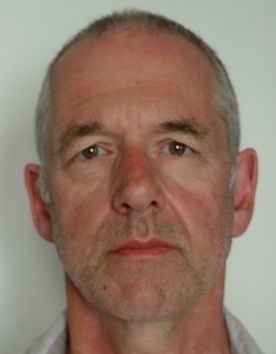
As children my two older sisters and I accompanied my mother to the local Congregational Church every Sunday. My father only ever went once, when I was confirmed. My memories of church attendance and associated events are all positive. It felt good to belong to that community which met each week, came together at Easter and Christmas, and relaxed at the summer Fete. I don’t recall ever objecting to attending.
When I was 13 or 14 that changed; I continued with the routine but found myself questioning what I was doing. One day, whilst completing my maths homework during the sermon, it occurred to me that I didn’t want to be there. I had questions that were not being answered, so the following week when my mother asked, “Are you ready for church?” I said, “I’m not going any more!” Nothing further was said about it from that day onwards but whenever the subject of religion arose elsewhere, I put forward arguments against the concept of God and religion. The vicar would call around from time to time and ask when the lost sheep was going to return to the fold. Eventually I told him: never! He was quite angry.
I didn’t realise at the time that what I was doing was waiting for someone to prove me wrong and show me proof of the existence of God and the validity of religion to help me return to the life of worship I had been a part of as a child.
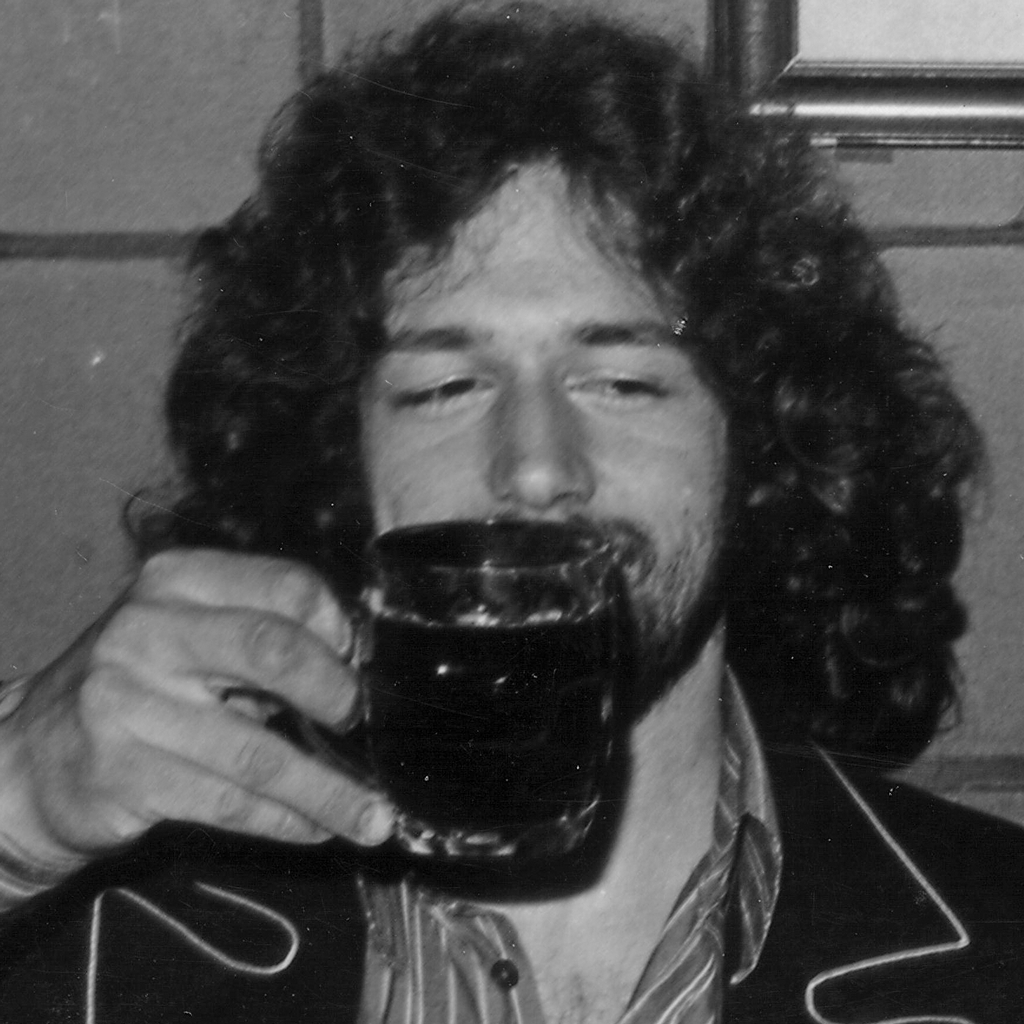
One day in 1972 or 1973 I was in a local pub, The Imperial Hotel, in my home town of Henley on Thames, having a discussion on the subject of religion with a group of people who called themselves ‘Bahá’ís’. One of them, Richard Boyle, invited me to their regular Friday evening fireside meetings, held in the home of Mary Hardy, an American lady who lived a few streets away in St. Mark’s Road with her daughters Sam, Gayle and Joanne. I don’t recall how that first meeting went but I’m sure I would have felt confident in dismissing their arguments. I do remember thinking that this was just another American sect of some sort or another. I didn’t attend another fireside for some weeks but by the time I did, something had shifted in my mind and I found myself more receptive to what they were talking about. When the concept of progressive revelation was mentioned, suddenly it all seemed to make sense and important questions I’d had for years were answered in a few moments! Within weeks I had formally declared myself to be a Bahá’í. My family, to whom I had long ago become an enigma, didn’t ask about my newly found belief. I suspect my friends thought it was a passing phase. There were many ‘alternative’ ideologies around in the 70s.
My recognition of Bahá’u’lláh as the Manifestation of God for this age did not transform my world in an instant, as it has done for some believers.
Yes, I had some great times joining in with Bahá’ís from Henley, Reading, Maidenhead, Slough, Wokingham and other nearby localities but after leaving school in 1970 my troubled mind had caused me to drift into a life of rebelliousness and an excessive use of alcohol and recreational drugs. This lifestyle continued to exert some influence over me, so when applying myself to the process of living a Bahá’í life became overwhelming and other issues weighed down heavily upon me, I resorted to that former lifestyle as a means of escape, then came the internal conflict which increased the need for further escape and so the vicious cycle continued until such time as my troubled mind settled down and I would realise that I needed to escape to the reality not from a perceived reality.
That pattern of fluctuation continued on and off for many years and was not helped by my ingrained need to ‘keep the peace’ in relationships with others, which led to an inability to be steadfast in my own convictions when doing so appeared to threaten the security of a relationship. During settled periods, I engaged with the community and attended firesides, feasts and conferences. It was a good time and I have fond memories of being at gatherings with friends, especially the Friday meetings.
On several occasions I started the fast with good intentions but never completed it. I remember how, on some days, we would join together early in the morning to have breakfast at one of the friend’s homes and again in the evening we would break the fast at someone else’s home. I think I might have managed to abstain from eating and drinking during the prescribed hours for a week but never any longer, much to my disappointment.
Some 40 years later I find that side of fasting so much easier to fulfil.
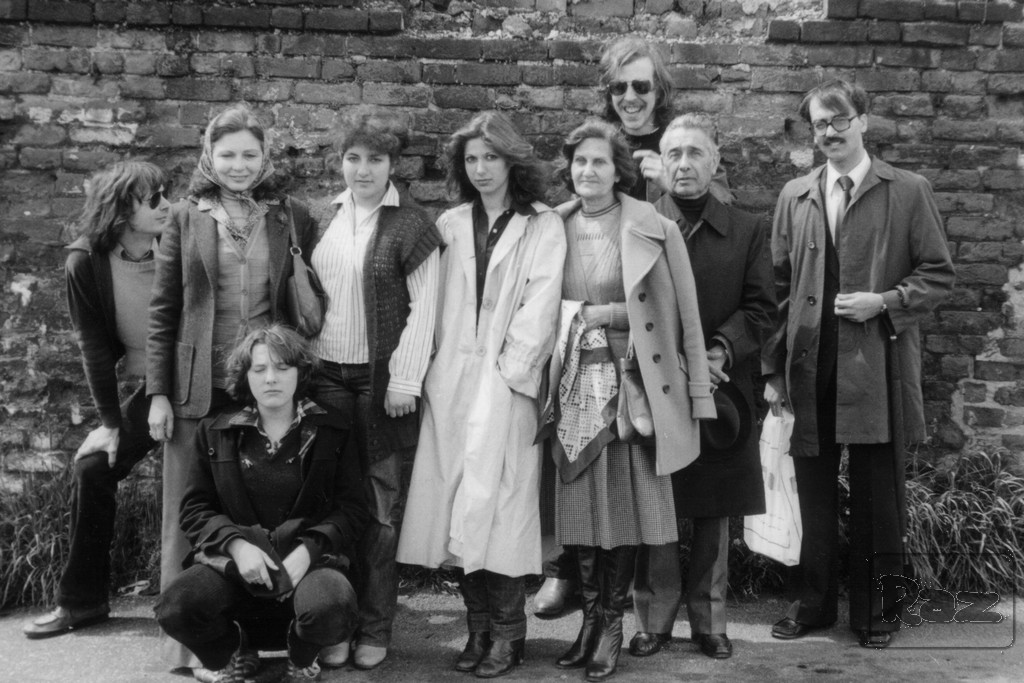
Bahá’ís from Henley and a few from elsewhere, circa 1975
L to R: Peter Maguire, Mary Hardy, Laleh Samandari (nee Afnan), young Persian lady, older Persian lady, Richard Boyle, Persian man, Farid Delshad. Kneeling in front is Joanne Hardy
I vaguely remember visiting the National Bahá’í Centre at 27 Rutland Gate for a meeting and attending a National Convention but I’ve forgotten where the convention was held. I also joined a group of friends who had planned a visit to the resting place of Shoghi Effendi.
For a while I was a member of the Local Spiritual Assembly and the treasurer. The nearby Reading Bahá’í community was a pleasure to visit. Bob Watkins and Jim Talbot are two names I remember well, along with the Rushdy family.
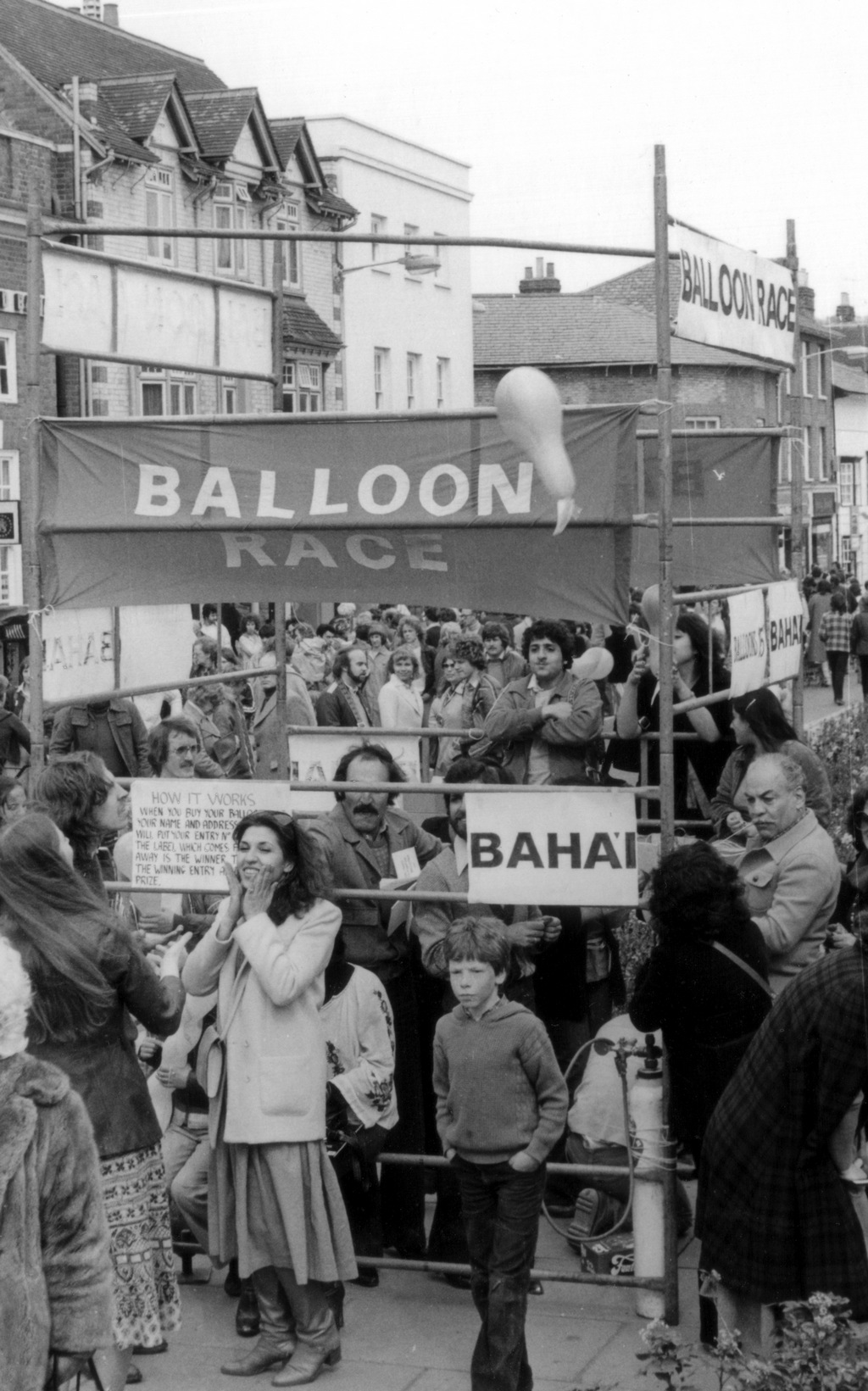
May Fair in Henley-on-Thames circa 1977
In 1976 I travelled to Israel to work on a kibbutz. Whilst there I visited Haifa and the Shrine of The Báb but was not particularly spiritually receptive at that time. However, I do recall the experience very clearly. I walked up Ben Gurion Avenue towards the gate at the foot of the terraces and wondered how I was going to get into the grounds of the Shrine. If I were to walk around one side and find no access it would be a long way there and back to walk up the other side. I decided to walk through streets to the right and I found a gap in the fence about one third of the way up the steps that approached the Shrine. Standing on the terraces and remembering that these very steps are where the kings and rulers of the world will climb in the future to pay their respects, I wondered, should I be there? At that moment a gardener beckoned me to continue my journey to the top.
After a lapse of commitment to your beliefs, trying to get back in touch with the soul when on your own is one thing. Trying to do so when in a relationship with someone who doesn’t value your beliefs and doesn’t understand what on earth is happening and why you don’t just get on with it is quite another. That was the position I found myself in soon after my marriage to Michelle in 1980. By that time I had moved to Reading and had sporadic contact with the Reading community. I often visited Robert Parry, who lived nearby, and Tawfiq Rushdy visited us with his wife and son, but gradually Michelle became less tolerant of my inconsistent application to the Bahá’í Faith. Eventually I came to the conclusion that I was causing more damage by trying to live an active Bahá’í life so I became ‘inactive’ for many years.
In 1998 Michelle and I moved to North Devon where she passed away seven years later. After her passing I gradually joined in with the North Devon Bahá’í community. I had met them beforehand but only a few times. In those days the community consisted of Mitra Broad, Brian Huxtable, Lenka from Eastern Europe (now living in France with her husband Paul Evans ), and a young lady who I believe was a doctor. By the time I became more active it was just me and Mitra.
In 2008 I married Vanessa, who found the principles and teachings of the faith in accordance with many of her own beliefs, so for the first time in three decades I felt comfortable and supported in actively following my beliefs. I was also a more mature and settled person by then and I had been able to manage the personal issues which had caused difficulty for me in the past.
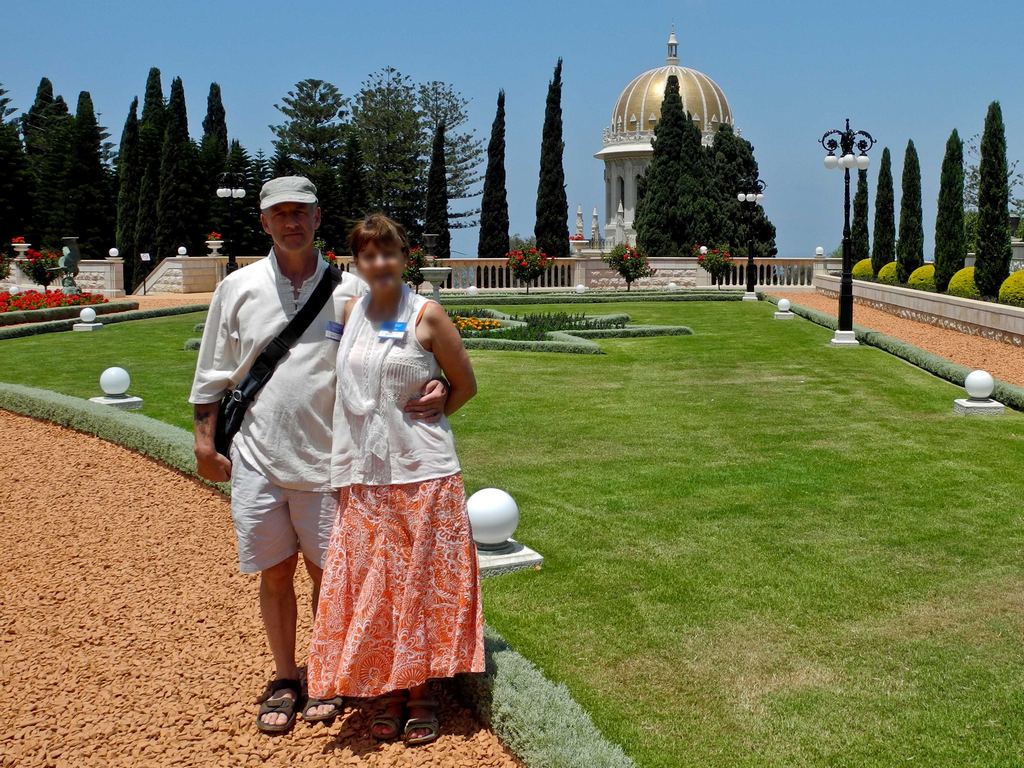
In 2014 Vanessa and I went on pilgrimage. This was a most significant occasion for me for so many reasons. I felt spiritually receptive and secure in contrast to the person I was when I visited 38 years previously. I don’t think I had ever considered pilgrimage as a possibility but here I was, and sharing it with someone I cared for deeply.
In 2018 during a stay in New Southgate, London, Vanessa and I visited the resting place of Shoghi Effendi and also the National Bahá’í Centre at 27 Rutland Gate.
We hold 19-day feasts in our home, and travel to other communities in Devon for cluster meetings and Naw-Rúz celebrations. Being with the friends is such an important time for both of us. These were all activities I had felt unable to do for many years but are now an established part of my life.
________________
Roger Smith
North Devon, April 2020
 UK Baha'i Histories
Thank you for sharing your story, Roger!
It is my privilege to share my story with you. Thank you for taking the time to read it.
Thank you for sharing your journey……you seem to be now settled and content,,,,,I wish you all BAHAI good wishes .
Thank you for your story Roger. I think you were in one of the Zoom devotionals in Devon that we attended. My daughter, Shirin, and her young daughter, was also present, (From Canada) – she is also the daughter of Bryan Huxtable! Bryan often spoke of you, and enjoyed your company. I was interested to read about Lenka, as I had been asked where she went. We do miss Devon – enjoy your time there. Carole & George, now in Washington State, USA
Thank you for taking the time to read my story, Carole. I met Shirin on a Ruhi (zoom) course. Hope all is well with you.
That might have been another Shirin. I tutored my Shirin through all the books when I was in Devon, along with some of the others on the Zoom Devotions – Andy Gray from Bridport, Fereshteh Best from Newton Abbot, Mike Hillard from Kingsbridge. – it’s been lovely seeing them all again Hope you are managing to get to the beach in this warm weather. My son in Torquay goes really early in the morning to avoid the crowds. Take Care and Baha’i Greetings Carole