
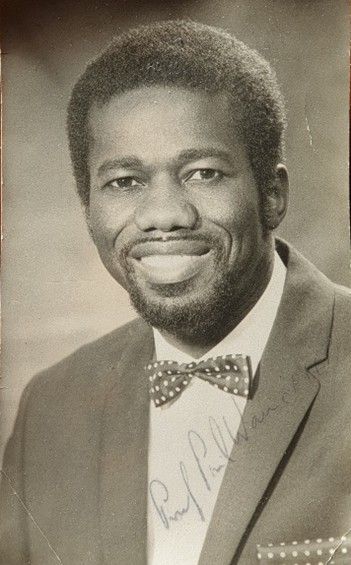
Abdul was born in Freetown, Sierra Leone in 1937 to Alpha Issa Noah (who passed away 13 September 1965).
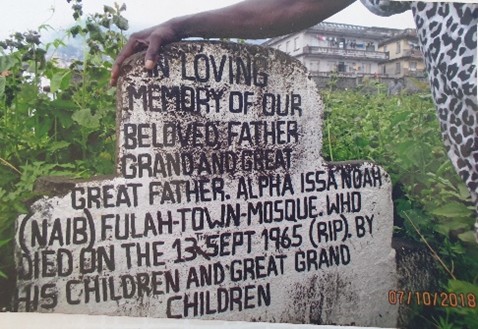
Abdul was a psychiatric nurse. Little is known about his early life even up until 1960, when he apparently arrived in Preston and resided at Whittingham Psychiatric Hospital. His birth had not been registered when Sierra Leone was a colony, so Abdul’s father made a sworn statement in lieu of registration on 22nd November 1960. We also know from a letter Abdul wrote that he had a brother who was “a writer and publisher in Freetown, S.L.”.
Later Abdul moved to Blackpool. This must have been before 1972, when Alan Woodhurst arrived in Preston. When Alan arrived in Preston in 1972, he was not a Bahá’í but had recently been given information about Bahá’ís near Preston so went to firesides in Southport, Blackpool, Burnley & Manchester. Alan wrote: “In 1973 Abdul and his wife Sandra kindly took me from our home in Preston to many Bahá’í gatherings, for example in Manchester. Then eventually when I was ready to become a Bahá’í, they took me to Gitta Chapin’s home, which served as a Bahá’í centre for Salford, for my official declaration and presented me with a prayer book.”
Mrs Liz Grove (neé Wilkinson) wrote her memories of Abdul as follows:
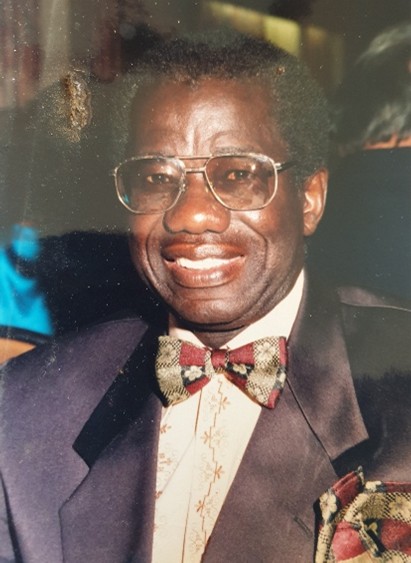
“I remember Abdul as an active Bahá’í from my youth. I probably first met him in the 1970s at the Lancaster Chaplaincy centre (many area meetings were held there). He had a wonderful beaming smile and mixed readily with everyone. My first job was in the Fylde, so I often attended feasts in Blackpool, many were at Abdul’s home by Stanley Park. He had a deep, resonant voice and he read prayers beautifully, he read in a way that made you listen. I remember a new Kendal Bahá’í being very touched by his friendliness. Frank Crossland was new to the faith and had not met many Bahá’ís when he met Abdul. He was struck by the warmth of his greeting. Seeing that Frank was new Abdul came striding across the room to introduce himself. For Frank this was a perfect illustration of the universal unity of humanity that he’d read about. He often told people about Abdul as an example of the oneness of mankind.”
Greg Moore wrote:
“Between the ages of 13 and 21, my home was in Southport. While studying for A Levels, a schoolmate and Bahá’í, Tom Fox, introduced the Faith to me and it really seemed like an open and positive force in the world. So, against my normal inclinations, I decided to attend the public meeting which Tom mentioned.
“The meeting was in the Southport Arts Centre, in a rather small room which the public could rent, right at the top of a very tall and imposing building on the main street, Lord Street. It was probably in 1974 or ’75.
“That evening, Tom met us in the foyer of the Arts Centre and led us upstairs. Entering the small room with perhaps about 15 people there, one of the first things that grabbed my attention was Abdul Noah, sitting happily amongst the otherwise white group of people. He listened to the speaker, as we all did, with rapt attention. And as he spoke afterwards, one could see in him humility, good-naturedness, happiness and friendliness in his manners. I recalled his name very clearly ever since: Abdul Noah. It was a lovely name, from a different culture.
“Reflecting on that first ever Bahá’í meeting I attended, and the positive impact it had, the thought came again and again throughout my life that, had not Abdul attended that meeting, I might never have become a Bahá’í. It was his simple action to attend it, travelling all the way from Blackpool to Southport, which made a big difference in my life; in a sense it was his sacrifice. But his presence meant so much. For that small action of his, I am eternally grateful!
“So as you can see, it was really my own inner voice which said, THESE PEOPLE REALLY BELIEVE IN RACE UNITY, that helped in my acceptance of the Bahá’í Community. There were other unities too, of course, class unity, age unity, intellectual unity…”
Michael Cleasby wrote: “It’s such a long time since I saw him. I remember he came to many meetings but not what he said. He was always happy”.
Senora Nela Vazques, a contact from his friends in Cuba wrote:
“I don’t know if Abdul belonged to any organisations here because he never talked about it. I only know that he was a lot of fun, he loved to dance casino, sing “Guantananera, and helping people in need was his greatest passion.” She ended saying, “I owe him so much. May God have him in his holy glory. He meant a lot to me; I keep him safe in the deepest part of my heart.”
Brian Eaton wrote:
“ABDUL NOAH: A DEAR FRIEND AND A SUPERHUMAN BEING.
“It was with great sadness that I learnt of the passing of our friend Abdul Noah. I had known Abdul for over fifty years. We played cricket together and against each other over that time. He was a very fine player excelling at both batting and bowling. I batted alongside him many times and was impressed by his elegant and effective stroke-play. Similarly, his bowling was out of the top drawer and, might I add very, very fast. More importantly Abdul played cricket in the true spirit of comradeship. That applied not only to his team-mates but the opposition as well. Abdul was respected by everyone that he came into contact with. He was known for his unstinting support and kindly, helpful nature. Just to be in his presence for a short while made one feel that much more alive. His joyous spirit could lift you on even the most trying of days. My late father was a cricket umpire and he and Abdul shared many moments of true hilarity. Similarly, when my late wife Linda and I were organising matches including teas he was invariably there for us.
“Abdul Noah was very highly regarded for the high levels of professionalism and dedication that he displayed in his chosen career. In a very challenging occupation, that of a first-rate charge nurse, he was always there for his patients. Indeed, with Abdul his work was his vocation and a labour of love.
“Most people find it difficult being in hospital. However, no matter how stressful the situation Abdul would quickly build up confidence levels. The patient eventually thought that he was on holiday so cheerful and caring was Abdul.
“It is difficult to believe that Abdul Noah is no longer with us. Some people are totally and utterly irreplaceable. That certainly applies to our dear friend. I often used to see him in Town, and we always exchanged more than a few cheerful words of encouragement. How would I evaluate Abdul? His advice to be kind to each other should be central to our inner focus. Even more than that Abdul deserves to be recognised for what he truly was. That famous phrase “one in a billion” definitely applies. In essence Abdul was a great and superhuman being.”
Brian further wrote:
“Abdul’s Bahá’í Faith shone through in his everyday practical actions of kindness and consideration. He once told me that the focus of Bahá’í was to be kind to each other. If only people as a whole adopted that theme for their own lives how much better the world would be. One listens to a number of people in the media. One can become bored by the same old rhetoric. Abdul in contrast demonstrated compassion and genuineness at all times. In his company one felt that life truly was worth living. Abdul was a friend who was there for you no matter what. He truly would never ever let you down.
“Abdul was inspirational at many levels. Not least was his sporting prowess, especially on the cricket field. Even on the most challenging of wickets his sense of judgement when batting was legendary. He knew as if by instinct which delivery to leave alone. More significantly he knew exactly which ones to drive majestically through the cover field. Abdul combined a quick “eye” with a keen sense of judgement. For that reason, he was an ideal colleague to bat with during any crisis situation. It was however as a very brisk quick bowler that his reputation was made. He won trophies for his bowling achievements on many an occasion. Abdul was a very kindly man but whenever he came on to bowl it truly struck terror into the hearts of opposition batsmen! He was capable of moving the ball adroitly off the seam. Not only was he fast but he was also shrewdness personified. Whenever he went back to Sierra Leone he was invariably in demand as a considerate and expert coach in all disciplines of the game. Abdul and my late father Tom Eaton had a particularly good rapport together. My father, following his playing days, was a highly respected and well-regarded cricket umpire. Abdul used to laugh when following an appeal for LBW my father smilingly shook his head and commented, “Sorry Abdul, not out this time!””
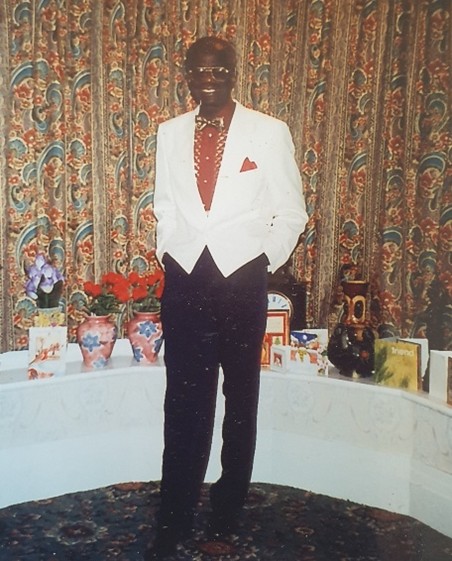
Abdul loved dancing and was a regular attender at Blackpool Tower ballroom.
Abdul Noah passed away on 22 April 2025, aged 86 in Victoria Hospital, Blackpool after a short illness of pneumonia. He had been admitted in around November 2023 into a Rest Home in Blackpool as he was referred to Social Services by concerned neighbours. He was buried in Preston New Cemetery on Tuesday May 20 May 2025, at 11am.
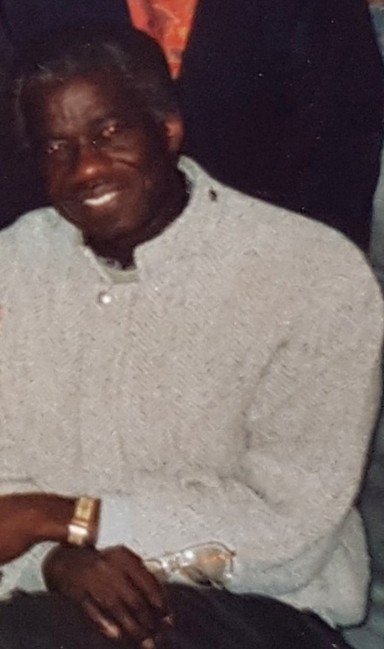
- Obituary prepared by Malcolm Craig.
- January 2026
 UK Baha'i Histories