
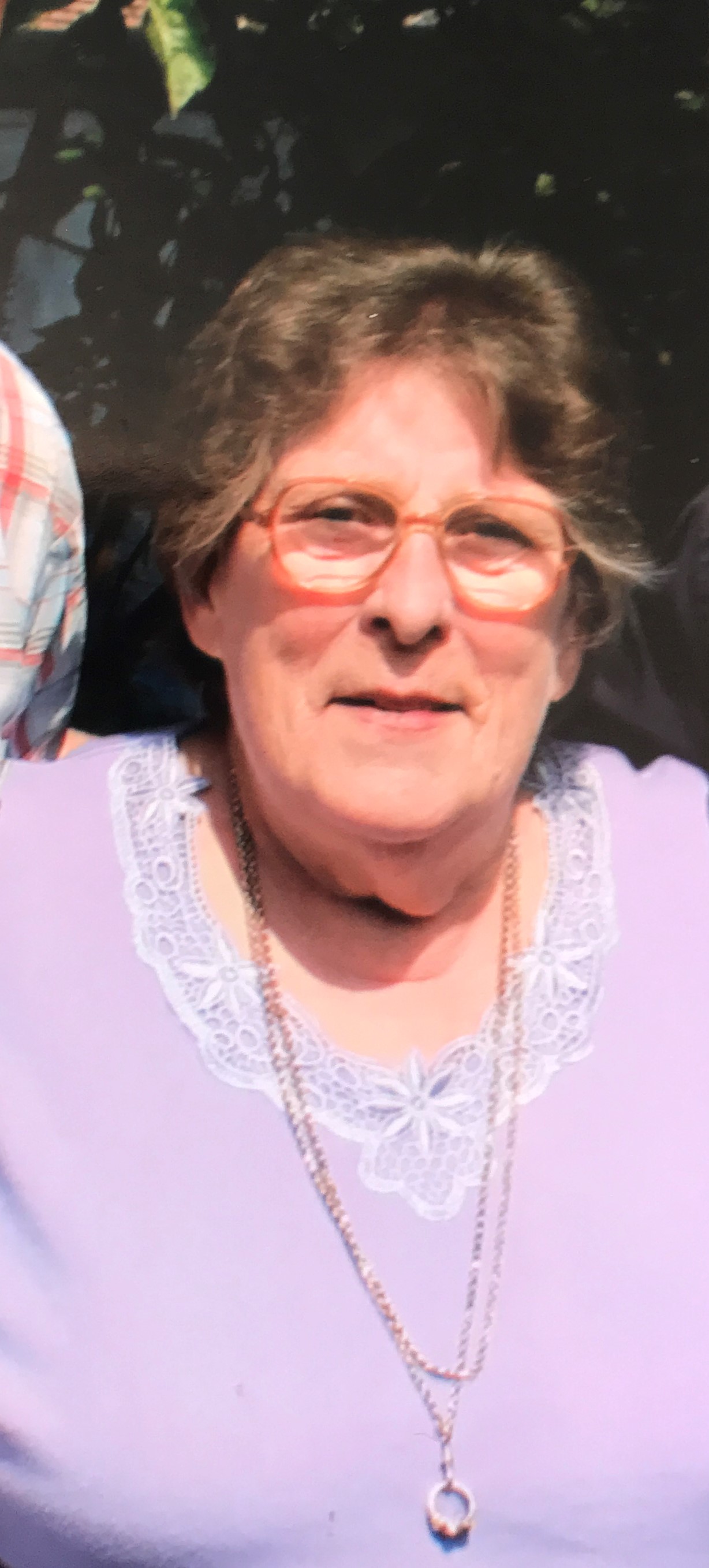
This was an interview with Hushang Jamshidi and recorded by John Giffin. It was recorded around 2012 in Northern Ireland.
It is a transcription of a 2+ hour interview which has been converted to factual and sequential events where possible. The pauses and repetitions have been mostly removed to improve the flow of the text. The original text contained 14,271 words, now reduced to 8,916. Every effort has been made to prevent loss of detail and substance.
Charlie Dunning Arrives
The beginning, as far as I remember, was when we lived in Donegall Pass in Belfast in 1948. We had a ‘wee’ spare room. Mummy kept people who worked in theatre, but always had one room which she just kept empty. There was just a bed in it. She said one day this ‘wee’ man came to the house looking for digs. She said he had a big long coat down to his ankles. He was elderly and had a small cardboard suitcase. So he ended up in the spare room.
That was Charles Dunning. We didn’t know much about him. You couldn’t really have a full conversation with Charlie because he started to ramble after a while. We always had animals in the house and he used to take me, who was just ten at the time, and my sister, who was three, up to Botanic Gardens, with the dogs. While we were playing, he would find people to talk to.
Later we were clearing out drawers in the house, those ones you put all sorts of rubbish in. We found a prayer book in one and realised it was Charlie Dunning’s prayer book. So every now and again we’d take it out and have a look at it and say: Do you remember Charlie Dunning?
Early Baha’is in Belfast
Then a year or so later more Baha’is arrived. There was Muriel Mathews from Torquay. Mummy had no room at the time but they must have heard of our address. When Charlie left after about a year he went over to Marion and David Hofman’s and they must have known the address. Miss Campbell over the street, a retired school teacher, took Muriel. We called her Auntie Muriel. She used to crochet ‘wee’ bags so she could pay her way. Alice Kerwin and her sister Prudence ‘Pru’ George and Beatrice Keary all stayed over the road from us. We used to go to meetings down town with them. I don’t really remember much about that, then they sort of disappeared.
Visit to Dublin and visitors in Belfast
In 1950 Aunt Min Hanna asked me if I would like to go down to Dublin to a Bahá’í meeting. I hadn’t heard of the Bahá’ís for ages and I didn’t even know she was a Bahá’í. It had never been mentioned. So we went down to Adib Taherzadeh’s house in Dublin for a Unity Feast. Jane Villiers-Stuart must have come into the Faith around that time because she drove us down in her old Bedford van. There must have been Kathleen Hornell, Nancy Crawford Blair, who became Nancy Jordan, all were in the van. I remember Vida Taherzadeh was just learning to walk. She was going round and round the table and Ronald was there as well.
After we got back I often went up to Kathleen Hornell’s flat at 127 Fitzroy Avenue after work. We used to have ‘firesides’ and other activities there. I was always outspoken so I was generally sent to make the tea just in case I said something out of place.
Betty Reed used to come over from England. Ernest Gregory, Ian Semple, Dick Backwell and George Townshend came up a couple of times from Dublin. Marion and David came, Philip Hainsworth and then Tarazu’llah Samandari. Mehdi, his son served on the first Spiritual Assembly of Belfast. Mr Samandari used to travel with Mehdi, or another son. Ursula Newman came from England as a pioneer and eventually got married to Mehdi. She was also on the Assembly. Isobel Locke was also a member of the first Assembly, and after Hassan Sabri came, he and Isobel got married. I think my aunt Min was on the Assembly too.
[The actual membership of the first Spiritual Assembly of Belfast in 1950 was:
Mr. Robert Sloan, Ms. Anna-Marie Lamont, Mr. John McGinley,
Ms. Mary (Minnie) Hanna, Ms. Ursula Newman, Mrs. Jean Beattie,
Mr. Mehdi Samandari, Ms. Beatrice Keary and Mr. George Marshall.]
Oliver McKenzie was a Bahá’í at that time. He was not allowed to tell his family he was Bahá’í because they and he would have been excommunicated from the Catholic Church, so poor Oliver had to sneak out. We didn’t see him very often.
When we had the firesides at night, and we were going home, whoever got home first phoned all the others and the phone was going all night. We all had one of those phones where you had to put coins in the slot. Kathleen, Jane, Nancy and myself were always on the phone to each other. If you rang up one of them and it was engaged, then you rang the next one to see if you could get through. If not, they were probably talking to one of the others. It was just like round and round until bedtime.
Nancy got married in Belfast to Dan Jordan, a Rhodes Scholar, from the USA. He gave a talk one night at Kathleen’s flat, and I swear you’d think he was talking to dons, professors and the like. I mean, no one could understand a word he said!
The Kirkwoods, whose daughter Yvonne had married Charles McDonald, were there in Belfast. They were all at Dan’s meeting, along with probably Jean and Oliver and John.
The next night we were going to another fireside and Dan said to me,” Claire, did you enjoy the talk last night?” I said, “Dan, I could have listened to your voice all night but I didn’t understand a word you were saying”; well, the looks I got from the others, but he just hadn’t realised how obscure his talks tended to be. That night he gave a great talk, which I swear could have been understood by a two-year-old. Others said to me afterwards “Thank goodness you said something because we hadn’t understood either”.
At age 17 I was going to Bahá’í things all the time. One day, Kathleen said something to me about her ‘declaration card’. I asked her what that was. She said “You mean we never had you sign a declaration card?” I said no, so around 1956 I declared.
I was the first Bahá’í youth in the community then. We didn’t have summer schools in those days because nobody could afford them, but there were weekend schools. ‘Uncle’ John Craven used to come up from the south. He had met ‘Abdu’l-Bahá, so everybody knew of him.
I remember one time when Philip Hainsworth, Ian Semple and somebody else, came over for a summer symposium. I asked them down to our house for lunch because I knew my father was working. He wouldn’t have Bahá’ís in the house. Just mention ‘Bahá’í’ and that was it. He didn’t even know why I wanted to be a Bahá’í. It had been a long time before he found out I was one, but my mother didn’t mind. So, I invited them down. As we were coming out of the hotel where they were staying, the cricket was on. They said they’d “just be five minutes”. Two hours later I’m still waiting for them to come to the house and I’m thinking my father’s going to come home at tea time, and I’m not going to be able have them in the house. Anyway, I finally got them away from the cricket, down to the house and put them in the sitting room which was our front room where the theatrical boarders usually had their meals. I told my Bahá’í friends not to come out in case my father came home. Sure enough, I was busy cooking eggs and bacon when in walks dad. He worked for a cement company, and of course he was always covered in dust, so he usually went straight up to have a bath. However, he said, “Oh, you’re making my tea.” I said, “I am, so go and have your bath”. My guests then had to have their meal quickly, and I ushered them out. I dread to think what dad would have done had he found them in the house.
After my declaration there were a few people who came to the community from overseas. There was Hushang Jamshidi and Qudrat Jamshidi, but Rustam came first when I was 17. He used to come down to our house at night. He was studying Latin and stuff and I used to go up to see his work. Beman Khosravinejad also came with the boys. The others had come from Karachi. Beman went to a place in Cameron Street and Rustam was with Mr and Mrs Campbell, just off the Ormeau Road, until he went to university to become a doctor, then started work at the hospital. The boys then left their boarding school and went to live in Belfast.
Pioneering to the Faroe Islands for some months
One night we were going to Bangor, I was in a car with Beman and we were going to a musical evening at Winnie Whelan’s house – ‘auntie Winnie’ as we called her. We were late, and the people were talking about pioneers. I was 20 at the time and they said they were looking for somebody to go to the Faroe Islands, and of course stupid me says, “I’ll go!” I didn’t even know where the Faroe Islands were. They had received a letter saying pioneers were needed for the Faroe Islands because Eskil Ljungberg was there, who was a Knight of Bahá’u’lláh. He had been ill a few times and had not informed the National Assembly, so they wanted somebody over there to keep an eye on him and be a pioneer as well, because he used to go over to Denmark where the hospital was, without telling anyone.
Back home and I told my mother I was going to the Faroes. By that time I had already told my father what it was all about and he couldn’t have cared less. “What are you going up there for?” I explained. I think I put my mother off the Bahá’í Faith for a start, but she asked where it was. I told her I hadn’t a clue, so we got out the map. It must have taken us an hour to find it because it was a pin prick. My mother said I’d never get on there. I told her there were 32,000 people on the Islands who seem to manage. Later in the year I went over to England to attend the National Convention, and from there to the Faroe Islands. On the way up to the Faroes I stopped with Brigitte Lundblade-Hasselblatt, Knight of Bahá’u’lláh in the Shetland Islands, and met the McKay family. I had a beautiful week with Brigitte. She was a midwife there and had delivered any child under a certain age because she was the only one on the Island.
On the voyage to the Faroe Islands the sea was choppy. I was very sea-sick, and relieved when we arrived. The sight that met my eyes was like Disneyland. The land was like a mountain side, almost straight up and down. Every house had lights on, all different colours, like fairyland. I thought it was beautiful, but we didn’t actually stay in that town.
The people who picked me up, the Svetsens, lived out in the country. They had been looking for someone to care for their children, which was the basis of my staying with them. Conditions were rather primitive – no running water, no electric light. The first night there, they gave me German black bread which I had never eaten before, very bitter, with raw fish on it! I thought, oh lovely! What am I going to eat? They were Seventh Day Adventists. They didn’t drink tea or coffee, they didn’t speak English and I didn’t speak Faroese or Danish, so, it was all sort-of hand signals. When I went to bed that night, all that was on the bed was a duvet. Well, in those days we’d never heard of duvets and I was looking for blankets and sheets. I got into bed that night and I kept my cardigan on, and used another cardigan with my legs through the sleeves as I thought I was going to freeze. About an hour later I was too hot, and peeled everything off. Who had ever heard of duvets back in 1959?
The boat only came in and out every two weeks. You had to get your letters and things off that day because the boat went out the same day and then you had to wait two weeks until it returned.
The Svetsens had five boys. The youngest, Heine, was 7 months. Anjborn was two and a half, Trigve was ten, Jonas, 11, and Kristin twelve years old. We only had the two youngest at first because Mrs Svetsen had been in Denmark to give birth to the latest baby and she had not long come back. The other three were with family in Klaksvik and I was in Torshavn. The first day, they just got in the car and took off and left me with the two and half year old. She took the baby with her and I wondered what was going on – because we couldn’t talk to each other. I think they were expecting me to have dinner all ready for them but I had baby Heine all day to care for. They ate nothing but chickens, which they raised themselves. The day after they returned, the wife gathered about seven chickens and cut off their heads for the next meals.
I was vegetarian at the time. It was really exciting! They didn’t have a sink. They had a big bin thing and put them all in that and the wife told me to pluck them and clean them. I didn’t eat any of them because I didn’t know if I had removed the right things out of their bodies or not – I hadn’t a clue. The whole time I was there, mostly I just ate potatoes and carrots because that’s all they had. They had no green vegetables or anything. There was no electric light, just canister things they had placed around the house, and no running water either. Water came from the mountain at the back and flowed continuously. I had to do the washing and the house had a big ‘Aga’-type range where the water was boiled. I had to go down to the river to get the water for washing.
After about a week we moved into the town. It turned out that Eskil’s flat belonged to them. He had his kitchen, bedroom, living room and bathroom down at one end. The Svetsens had a big room which they all slept in, and they had a bed in a sitting room, and a kitchen. They would share Eskil’s bathroom which didn’t go down too well with him because he was a real gentleman, and for him to have his things disturbed didn’t go down too well. It’s a wonder he didn’t have a nervous breakdown. He was so used to being on his own, quiet and tidy. Every morning he used to make me a cup of coffee and leave it outside the kitchen while I was getting the children ready. When he and I were saying prayers in the evenings, we had to leave the sitting room door open so they wouldn’t think there was anything untoward going on. I was twenty and he was eighty. We went out during the day. I wasn’t allowed to talk to Mr Svetsen if I met him outside, or any of his male friends, because I was a single girl, so my only communication was with Eskil, and a Swedish lady I met who spoke English. She was in the flat upstairs and she and I would sit on the stairs and talk. I worked from seven in the morning until seven at night and had one day off. If the Svetsens were going out somewhere, I didn’t have the day off as I had to care for the children.
After a while I decided to look for other work, and the Swedish lady told me about a Colonel Goldney. He was leaving the Island for a while and a lot of his business was in English and would I do the letters as they came in? His wife was still there but leaving on the next boat. I said I would answer the letters and make sure they went. What I didn’t know at the time was that Mrs Goldney had thirteen cats! As well as doing his mail, I had to look after the cats. I didn’t know what was worse, five boys or thirteen cats. Anyway, the first night, the lady showed me around and she was very nice. All the cats were running round all over the place, but the smell was horrendous! Then Mrs. Goldney went around and lit a joss stick. In those days, I wasn’t familiar with joss sticks and I thought she was trying to poison me, so I got into my room, chased all the cats out, closed the door and opened the huge window to get some fresh air. I thought no way does this situation suit me, so that was when I decided to return home. Unfortunately, then I did a bad thing. I didn’t tell the National Office – I just hoofed it.
Eskil and I had been fine together. We talked about it all, and what had gone on and how it was so strange and weird for me. A lot of people there were Seventh Day Adventists and you couldn’t just talk to them straight about religion. You would have to really be like Eskil, just be around them. Even he, after all the years that he had been there, was not trusted. He was an outsider, and that was that. He was completely on his own as far as Bahá’ís were concerned. I was the first one that went up to see him. No other Baha’is appeared while I was there, from May to 29thAugust, the day before my 21stbirthday. I had told Eskil previously that when the next boat came I would be gone. That was it.
Shetlands, Newcastle, then Epsom
When I arrived in the Shetlands, Brigitte was away, so I stayed with the McKays for a while, then I had a bedsit. I got work looking after an old lady during the day. In those days you had to work because the National Office couldn’t support you much as a short-term pioneer.
Soon after I moved to Newcastle to stay with the McKays for a while, then I had a bedsit. One of the local Persians was a psychologist at a hospital for the mentally handicapped. I was able to get a job there as an assistant nurse, and was there for two years, staying with the Jamesons. I attended feasts and firesides, and there must have been eight because having just turned 21, I made up the 9thBahá’í for the Local Spiritual Assembly to be established.
After about two years, in about 1961, I moved to Epsom and worked at the Manor Hospital to do my nursing exams. In Epsom the only people I can remember are two children called Safina and Saba, with a father called Abbas. I remember five-year old Safina especially. She was with me at the Bahá’í World Congress in 1963. I had offered to help with the children and it felt as if we had about a thousand on the first day. Safina translated for us. Five years of age, and she was our translator, from English to Arabic or Arabic to Persian. Even when adults couldn’t explain things, she was the one who translated everything. Eight of the children were under a year old, and one was only three weeks old. I took them over, and somebody had left a bottle for them, which believe it or not went round all eight.
During the World Congress I travelled back and forth to Epsom each day. At about 10 o’clock each night we had to make the announcement: “Would parents please come and collect their children!” That’s how bad it was. They had just left them with us each day and that was that, so we didn’t see much of what was going on in the Congress. During the day we were lucky to get an hour for lunch, which gave us a chance to see people we knew. I hadn’t seen Muriel Matthews since 1940 and this was 1963.

Claire at Manor Hospital in 1963
Working in the National Office
I began to visit the National Office every day to pursue my wish to visit Africa. Jeanette Robbin from the United States was there, en route home from pilgrimage, and Johnson Johnson and another boy from the Solomon Islands. I told Betty Reed I wanted to see the Africa Committee, and after a couple of months she said the National Assembly would like to have a meeting with me. In the meeting room the NSA members were all sitting around the big long table and I was on the end. Betty said they didn’t think it was wise for me to go to Africa, and would I like to come and work at the National Office. So, that was that. I worked at the National Office, with Jeanette and Johnson, Jeanette having stayed on for a while. She married and went to live in Texas and we have always kept in touch.
At that time, they were dividing up London which had been one Local Assembly into 32 separate Assembly areas. Shoghi Effendi had said that London had to be divided up into different boroughs, which would all have different Local Assemblies, which didn’t go down too well with the communities because it split some families up. So, we did that. I started to come up every day. I worked from seven till one in the hospital. Then I would come up to the National Office. Then the next week we did one till nine, so I would go up in the morning. I was up there nearly every day and also on my day off.
We only had one guest room in the National Office, so when the committees came at the weekend, it was a hassle trying to find somewhere for them to stay. Betty directed me to go to the upper side of Hyde Park, which is near the National Office, where there is a big row of houses, all Bed & Breakfast businesses. I was to go with a large writing pad, visit all of them and make notes of their toilet facilities as well as their cooking and sleeping arrangements. To think all the embarrassing things I had to do. When Betty first asked, I said “You must be joking”, but no, it had to be done.
I stayed at the National Office for about two years. Jeanette then had to go home because she only left home to go on Pilgrimage. She hadn’t left home to stay away. She had to make peace with her parents, who were Jewish, because they had never really accepted that she was a Bahá’í. Then Betty left to go to South America for six weeks. By this time, Joe Jameson was Chairman of the NSA.
Each day I had to open the mail, type up some things, and register the declarations and so on, and I would send such material to Joe for signing. With both Betty and Jeanette away, I was there on my own. There really wasn’t a lot to do because the everyday work Betty would normally do wasn’t happening. The routine was more or less sorting mail and keeping the place tidy, opening it for meetings and so on. When Betty came back, things more or less then returned to normal.
I got a phone call one day and a voice says, “This is Marguerite Sears.” I said, “Oh is it?” “This is Rúhíyyih Khánum!” I thought somebody was fooling around. She said, “No! This IS Marguerite Sears. Bill and I are here.” They were coming from Africa where they had been for years and Bill’s health was deteriorating. They had come back to the UK to go on to America.
Anyway, I was talking to her on the phone and she and Bill were wondering if I could find them somewhere to stay, but not too expensive. I said, “Well, we have a guest room here.” She said, “Oh, great. We’re on our way.” I put down the phone and I thought, “Oh! I didn’t tell Betty. How am I going to go and tell her I have invited Marguerite and Bill Sears to come and stay in the guest room and I didn’t check with her first? I went very timidly to her and she responded “Wonderful, wonderful!”
Bill Sears was quite ill when he was staying at the National Office, and Marguerite, Jeanette and I used to go out and get him things.
On one occasion Betty asked me to tidy the NSA Room, and mentioned that there was a chair there that ‘Abdu’l-Bahá had used (it was roped off). There were some filing cabinets with tiny doors. I opened one of them, just expecting to find envelopes. Inside was something that sort of felt hard, like a stone. I thought, “Gosh, that looks like silicon wax or something” and I had touched it, then I read the label. It was the blood of Bahá’u’lláh! Well, after I had recovered from the shock, I put it back in and I’m muttering “Please God, don’t kill me, don’t kill me!” I was absolutely terrified. My heart was thumping. After I settled down, I opened another one, and that was the hair of the Báb!
I thought right, that’s enough for one day. I would have loved to have gone through the other cabinets but I was too frightened.
Anyway, I noticed an area like a cupboard seemed to have been painted over. I wondered what was in there so I got something sharp and went around the edges of it and opened it. Inside I found a plastic bag with a towel, wash-cloth and a flannel and soap. I thought, some lazy cleaner has thrown this in here and forgotten about it. All indignant, I went flying downstairs to tell Betty, but she interrupted and said “Where did you find those things?” I thought I was in trouble, but she went on “We have been looking for them for a long time and finally forgot about them. It was the towel and wash-cloth that Shoghi Effendi had been washed in after he died!” Someone had put it there for safekeeping and perhaps forgotten about it. So, that was it. I was off the hook.
As for what I’d done by looking in the cabinets, I was never found out. Many times I was tempted to go up and look at the other items, but decided I had seen enough.
At the time that British Guiana’s name was changed to Guyana, Betty wanted to send something special to them from the NSA. Apparently there existed in the office a page in Bahá’u’lláh’s own handwriting, so she sent me down to the basement to get it out of the file. She said “You will see a yellow envelope. Pull that out”. She knew exactly where everything was. I found the writing and handed it to her. She told me to go out and get a photocopy. I said, “I don’t know London. I just come to work and go home”. She handed me the ‘A to Z’ atlas of London, some money, and the page and envelope with the Writing of Bahá’u’lláh in it. I put my prayer book and the Writing in the map book and held on to it so tightly. It was a bit crumpled up but I was so afraid to let it out of my sight in case I lost it.
Eventually I found the copy-shop and I said to the girl, “Oh be careful with that, it’s very old you know”, so she was quite gentle with it. I didn’t want to tell her it was sacred. She made a copy and said “That doesn’t look very good, I’ll do you another one.” On the way back, I thought, nobody knows I have this second copy. So, all the way back, I’m thinking it was only a shilling. Betty has her shilling’s worth. Then I realised I would never be able to show it to anybody. Such thoughts were still troubling me, and back at the office I gave Betty both copies. After all the anguish I thought to myself, Oh God, what would I have done with it?
I like my own time and I like my own company. I like to do my own thing. Every night there would be a meeting. Every weekend there would be something going on. Betty would say, “We’re going here, we’re going there”. And I’d say ‘No!’ “You and Jeanette are going. I’m going home.” I couldn’t take the pace of it. Not only that, there were always too many crowds. Betty would be giving talks and all that kind of activity. She worked relentlessly. We got there to the office at 9 o’clock in the morning and sometimes we were going home at 11 o’clock at night. The three of us didn’t want to be away from each other, and the work we were doing was for Bahá’u’lláh, but sometimes I’d say “No,” that’s it!”
We once had a weekend at Ted Cardell’s pig farm. The smell was overpowering but you get used to it! God help him, we were only back a week when the whole thing burned down and all those pigs were gone.
I met a lot of well-known Baha’is while working at Rutland Gate. Rúhíyyih Khánum used to stay at the hotel the Guardian had used. One day she phoned when Marguerite Sears was at the office, to say she would be at the Guardian’s Grave at such a time so we went there and said prayers. Some Persian believers were there, kneeling, but Rúhíyyih Khánum was not. One of them said to her “Why don’t you kneel?” and she answered “Shoghi Effendi didn’t say I had to kneel at his graveside.”
We went into the small shed where cups of tea were made. Rúhíyyih Khánum was there, Marguerite Sears, and myself.
Charles Macdonald had replaced Betty Reed as NSA Secretary, not long after we had left, and he and his wife Yvonne were occupying the upstairs flat. Betty had done all her filing in the middle of the floor, but when I returned the following year to visit, everything was totally different. Charles had just one filing cabinet in the corner of the office and that was it.
Betty worked hard. Even when we left at 11 o’clock at night, she would be on the telephone, yet in the mornings you would hear her singing away in the bathroom. Jeanette bought a glockenspiel and we had to learn to play it. Sometimes Betty would say, “I wrote a song this morning while I was in the bath”, and Jeanette would get out the glockenspiel. Betty wrote five songs in five days. Some of them were brilliant. I think Jeanette may still have them.
I left London and the National Office in August 1968. I married Michael Greenberg in 1969.
_____________
Marguerite Sears had gone on alone to the USA and had asked me to call her when I arrived. Once there, I phoned her at her place in Palm Springs and she said “You’d better get down here, there’s plenty to do”, so off I went.
Canadian poet and author Roger White was there. He was Bill Sears’ secretary in the States. One of the Canadians funded him to work for Bill. I was meanwhile near-penniless, and the Sears were aware that I was a knitter. One of the Baha’is in Palm Springs had a big health food store, so they gave us a whole corner of it. We used to go down to Mexico, buy white pottery, and then sell that and items I had knitted, in the food store. Roger smartened up the pottery and I knitted. Marguerite would put my knitting, all dolled up with tissue paper, in boxes labelled Claire Copley, and I would carry on knitting until my fingers felt like sticks. Some customers would come in and say, “Oh look, I started a sweater two years ago, could you finish it?”, and they would be happy to pay me to perform that service. I also started a knitting class there, as people wanted to knit, so that’s how I earned some money.
There were always people coming in from all over the world to see Bill and Marguerite, including of course their sons Michael and Billy. Bill usually, when he came home, went straight to bed. He was writing his books all the time, and was writing ‘All Flags Flying, the sequel to ‘God Loves Laughter’, at the time the nine members of the National Assembly in Iran were martyred. He stopped work on that book and wrote about the pogrom. He was always writing.
Bill and Marguerite moved to Canada and were there for quite a few years. Through a Bahá’í, I got a job in the meantime with a millionairess who worked in a school and she was looking for students. Her husband had died and she wanted somebody there all the time. I was only with her for three or four months because I wanted to go back to Los Angeles. She took me down to La Costa, where she had another house, right on the golf course. We had only been there a couple of days and she said “Claire, don’t be wandering around here too much because there are a lot of Mafiosa”. I thought, flipping heck, what the… where am I? Rancho La Costa they called it. She also said “I’m going to Africa just for three months. Would you like to come with me as a companion?” I remembered telling the British NSA of my wish to go to South Africa, but I declined the offer. Everything now was different, including getting married, but I’m sorry that I didn’t go, when I think that it was my dream.
Returning to Los Angeles with Mike I got a job with a couple, Polly and her husband (can’t remember his name). He was a stage manager and she was in a chorus in ‘My Fair Lady’ with Douglas Fairbanks Jr. They had two children and they used to take us at night back stage and we would see Douglas Fairbanks going on and off the stage. They went away when they were on tour and I would stay to look after the house and the animals for them.
Then my children, William and Sarah, came along, and I got a job in a ten-pin bowling alley. I ran it by myself, and fixed the machines. It changed ownership and passed into the hands of a couple called Murphy, who had six boys and one girl. We all mucked in, but they hadn’t a clue what they were taking on. Eventually I found out my husband had a girlfriend, so I decided to get divorced and go home to Belfast, in August 1980.
At the Irish Summer School in Waterford, I was recruited for the tuck shop as we didn’t have a summer school in the North of Ireland at that time. Later, at the school in the north, Hushang Jamshidi was running the tuck shop. He liked to go to bed at 10 o’clock at night, which didn’t suit the youth. I said I wouldn’t mind running the shop, and so I carried on doing it.
Pilgrimage
I was only on pilgrimage once. There’s a lot of walking and a lot of steps. I did the steps right from the bottom to the top. I started at the bottom, did one, sat for about five minutes and then did the next one, determined to do the whole lot, and I managed it.
One day there I was in conversation with an Israeli girl. She was gazing down at the terraces and I said, “It’s beautiful, isn’t it?” She agreed and asked me if I was a Bahá’í. I said I was, and on Pilgrimage. She said, “I’m not a Bahá’í but when I look down here and remember what it used to be like, it’s as if someone has rolled out a beautiful Persian rug right down the whole mountain.” I thought, for somebody who wasn’t a Bahá’í, to say it like that was really nice.
I remember one night when we were in Haifa on pilgrimage, there was a big show being put on. There were over eighty of us there from the States. Marguerite needed a wheelchair by then, as she was unable to walk. The hotel we were in was just above the Shrine of the Báb. We looked out the window and the Shrine of the Báb was just below us. The room that Marguerite and I were in was 999. Yeah!
Stalwarts of the Belfast Bahá’í Community
Lisbeth Greeves was the most gentle, most spiritual person I have ever known. She really was. Didn’t matter what was going on, there was always Lisbeth. She spoke softly to calm everything down or to explain things. She was a healer. If you were feeling ill, she would just put her hands on you and say a prayer and just be gentle and kind.
She used to have a prayer circle with non-Baha’is. Her family weren’t Baha’is, and her husband wasn’t too keen on having Baha’is at their home, so the only time we could go there was when he was out.
Kathleen Hornell was a sharper voice but could still give you the ins and outs of everything and put you on the right path.
Charles and Yvonne Macdonald had several abodes while they were here. I remember one time they got a dog. They were going to make money to go on Pilgrimage and they wanted to breed the dog. Tthey asked me one time to try and teach Iain to knit. And I said, sure no problem. All day I think we spent, couldn’t get him to get the hang of it …I said, “There’s something wrong with that wee fellow,” I said, “There’s no way he’s going to knit!” It wasn’t till later, that I learned he was left-handed!
Meeting Hands of the Cause in the National Office
I remember Hasan Balyuzi, who used to visit the office because his mother-in-law, Kathleen Hornell, was there. He and Molly, his wife, used to come with the five boys.
George Townshend also used to come to the office. His son Brian and I knew each other quite well because we were the only two that smoked, even at that young age. He was a school teacher. Whenever there was a break, Brian and I would be away to the nearest café for a cup of tea and a cigarette
John Ferraby used to come to the National Centre from time to time and he would always ask “Do you have any murder books?” He knew I read murder books and I always had some at the back of the National Office. He would take his books, and go upstairs, do whatever he had to do and you would be lucky to hear another word from him. He wasn’t a great conversationalist.
Dr. Adelbert Muhlschegel
One visitor was Dr. Adelbert Muhlschegel. I received a lovely letter from him at home. Also I think I have a couple of Ian Semple’s letters. Some of them were congratulatory letters when we were still in touch, when my children were born.
Hand of the Cause William Sears
I lived with Bill and Marguerite in Palm Springs. When Mike Greenberg and I were getting married, we only had about $50 between us. Bill gave me away and Marguerite ‘married’ us. Bill and Marguerite were my family and that’s where we were getting married. When I left there about two weeks before, little had been done to the rather plain house. We were in this house for a little while and Roger White was there and he was very artistic. He used to bring things up from Mexico and make them presentable. When we came back to get married, the whole house had been redecorated. Roger had put up a circle of flowers and they had decorated all the walls, and he had prepared the programme with the readings and a note that Bill Sears had given me away. All the Baha’is in and around Palm Springs had brought sandwiches and there were about five wedding cakes.
Whenever Bill came home from wherever he had been away, he would go straight to bed. Bill wasn’t able to mix much then with the community. He returned from Africa in 1968 in very poor health. At Palm Springs people would come to the house and, depending on what he was doing, would determine if he came out to say hello, or not. He was trying to write the sequel to ‘God Loves Laughter’, entitled ‘All Flags Flying’, and he shed many tears over it. He died in Arizona on 25thMarch 1992. I kept in touch then with Marguerite, and I have all her letters.
Marguerite Sears got me Bill Sears’ book God Loves Laughter. I was reading it coming up and down on the train every day from Epsom. At the World Congress she went round and asked all the Hands of the Cause to autograph my book before they went to the Holy Land for the election of the Universal House of Justice, and I had the stamp of the Congress as well. Then, somehow, someone stole it. The thing is they’ll never be able to say it’s theirs because my name and address are in it from Manor Hospital, Epsom. It’s still out there somewhere.
I remember when my son William was born and I phoned Marguerite, she said, “What’s his name?” I said, “William.” She said, “Claire you have no imagination, you know!” Then when Sara was born, I said, “It’s Sara, Marguerite.” She said, “You still have no imagination.”
Early Days in Belfast – more
Aunt Minnie used to come down to our house every day for her lunch. My father would go to church only for weddings and funerals. My mother went every Sunday. I’d just go to Sunday School to The Magdalene which is also in Donegall Pass where we lived at number 68. Aunt Min was a civil servant. She probably heard of the Bahá’í Faith through Charles Dunning. She used to come to our house every day for her lunch because she worked beside St Anne’s Cathedral.
I had never spoken about the Faith with Aunt Min previously but one day, after I had come back from California, we were out walking and could see Belfast Lough, when she suddenly said, “When I die, I want my ashes scattered.” Now, she hadn’t been around the Baha’is for years and years and I’d been away for years, so there was nobody looking after her knowledge of the Faith. I said, “Baha’is don’t get cremated.” So, after Aunt Minnie died circa 1998, she was buried in Carnmoney Cemetery.
My Father’s background
My father’s background was all show business and fairgrounds. After school and at the weekends we would be away to the fairgrounds. He used to have a shooting range, a hoopla stall – all those kind of things – and I used to go with him all the time. When I was 13, Chipperfields’ Circus came to town and we had two sisters and a brother of the Chipperfields staying with us. They were looking for somebody to look after their children and I looked after seven children during the day. When I got them all to bed, I helped with the horses and I got them all prepared before they went in the ring. They were supposed to come back the next year when I would have been 14 and finished with school, and I was going to go off with them but they never came back, so I never went away with the circus. God knows where I would have been by now!
Final thoughts
I feel I’ve been blessed in my life with the people I have known. God knows how I would have turned out to be or if I would have even lasted this long if I had not been with them.
With my Mama keeping people who were working in the theatre, I was often down in the theatre as well, and so I would have been drinking. Not using dope in those days but smoking heavily – still do. But it would have been a wild life. I also sang and my grandmother was in the White Shrine of Jerusalem, an organisation with a connection to the Masonic fraternity. She was a high priestess. A lot of the family on both sides of the divide were in Masonic Lodges. Every time they had a ‘do’ on, I would have to go and sing, including at weddings. I did light opera but I also had singing lessons. Once I went to the Faroes, all that ended.
Mammy was a Bahá’í for a couple of years but she didn’t know who Bahá’u’lláh was. She went along for the ride. When she declared, she didn’t even know what she was signing. Afterwards she was on the Spiritual Assembly of Belfast but she just didn’t understand what was going on. She joined the Salvation Army for the singing and all the rest of it but she always went to church on Sundays. Didn’t matter which church. My father wasn’t a church goer at all, just weddings and funerals and the like. Mommy died in 2000.
The Book: The Proclamation of Bahá’u’lláh
I went to summer school in the South in 1968, just before I left for the USA. My copy of ‘The Proclamation of Bahá’u’lláh was signed by most of the Baha’is who were at that summer school. Hand of the Cause Mr Khazeh was in attendance and he wrote in the book:
Dear Claire,
Your services in the National Offices of the British Isles was so wonderful that dear Betty always wrote to me about the two young girls assisting her day and night in the NSA office. That was my privilege to meet you in Dublin Summer School on my four days stay in the school.
You’re leaving for the United States and I beseech happy luck for you.
Jalal Khazeh
__________________________
Claire Greenberg (née Copley)
Recorded in Belfast, 2012. Approved for publication, 2021
 UK Baha'i Histories
What a super, wonderful life is service! Thank you for sharing it !
A big thank you to Hushang Jamshidi and John Giffin for recording Claire’s priceless story. I loved reading every word and could hear Claire’s unmistakable voice in my head telling the story.
What a joy to remember all the people that she spoke about, including her mammy. I have such a fond memory of Claire, who was no teenager herself, pushing her mother in a wheelchair into Portrush from the Northern Ireland Baha’i Summer School at the Catering College. My mother was always happy to go with them and Mrs Copley insisted on buying my Mum a beautiful china mug in the White House store. I also remember the heated rows between Claire and a certain Baha’i (no names, you know who you are!!!) who hated smoking. Just as well that these Baha’is loved each other.
I also remember a hilarious evening in Mrs Copley’s sitting room when Jane Villiers-Stuart recounted the tale of the piglet with an upset stomach that escaped through a hole in the bottom of her Bedford van and blocked the traffic at the City Hall in Belfast as trolley bus drivers tried to catch him.
Dearest Claire, you are a legend and I really miss seeing you and hearing your voice. I will make sure that Jeanette sees your story. Much, much love, Hazel
What an energetic and amusing story. There are so many ways to serve the Faith xxxb~Chris Abbas