

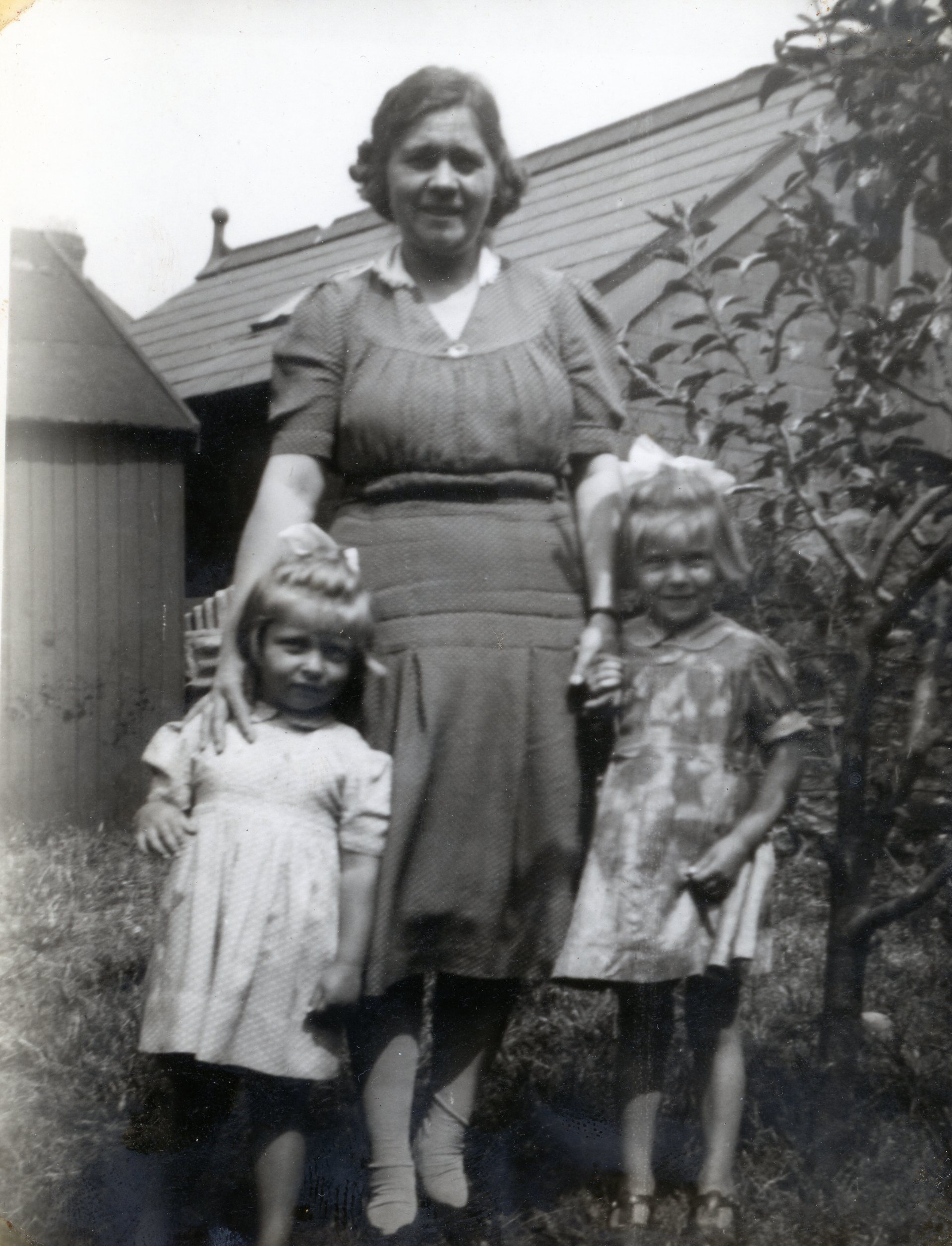
I was born Valerie Margaret Jones in October 1944, the elder daughter of Rose (née Le Gray) and her husband, Oswald Matthew, known as Mac. I was an infant in the days during and immediately after the Second World War when shortages were frequent and everyone was affected by the conflict. In 1946 my sister, Irene Jane was born, and our family lived at 6 Werfa Street, Roath Park, Cardiff. My sister and I were the first Bahá’í children to be born in Wales.
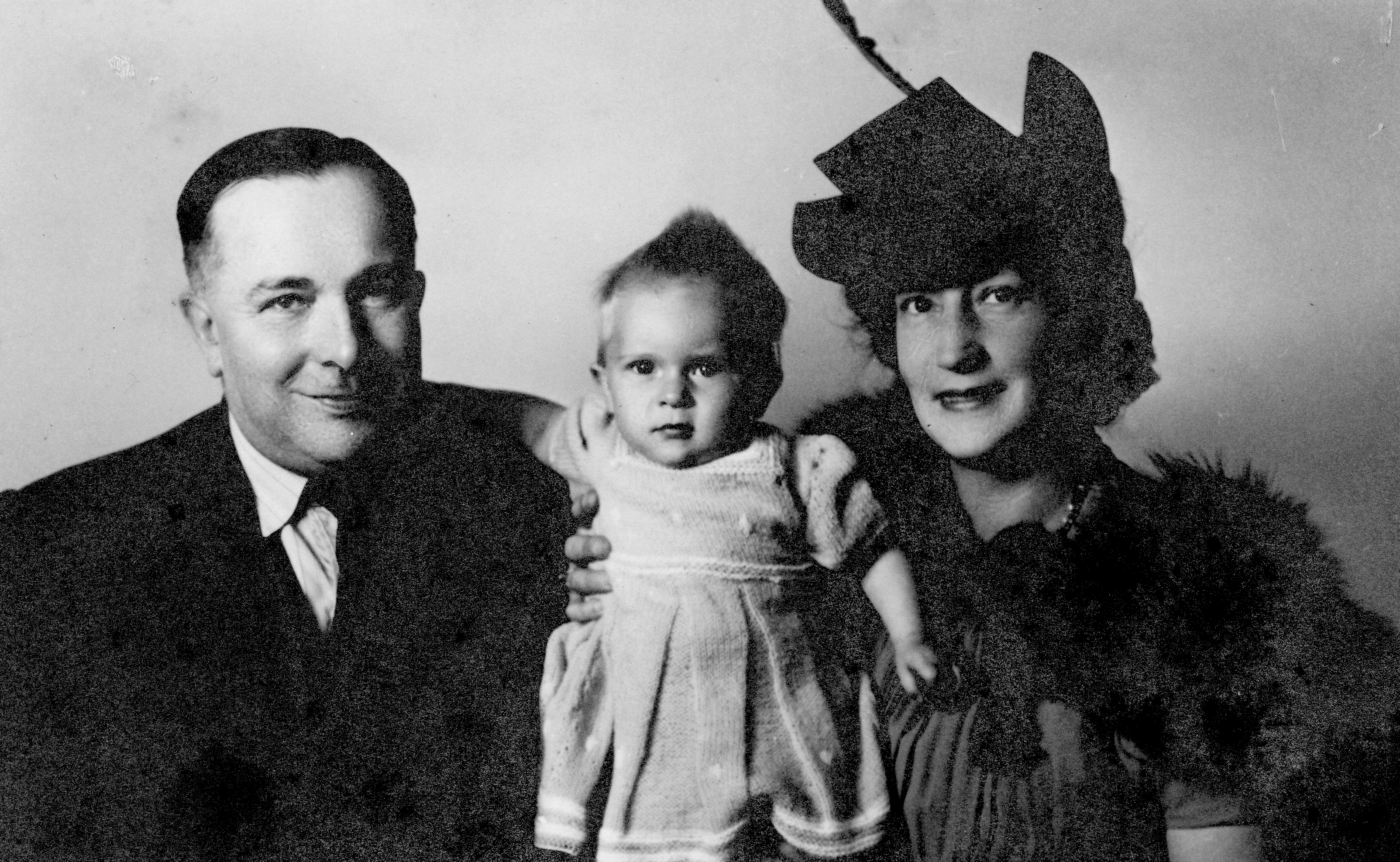
My mother had met and married my father in 1939 but I am not sure exactly when she moved to Cardiff. The Guardian, Shoghi Effendi, had in 1947, called for pioneers to move to the four capitals of the United Kingdom and it was fortuitous that Rose was able to be in Wales in advance. She had lived in London until then, and had attended the children’s classes of Mother George during the early years of the twentieth century, and been part of the Bahá’í Youth Committee in the 1930s.
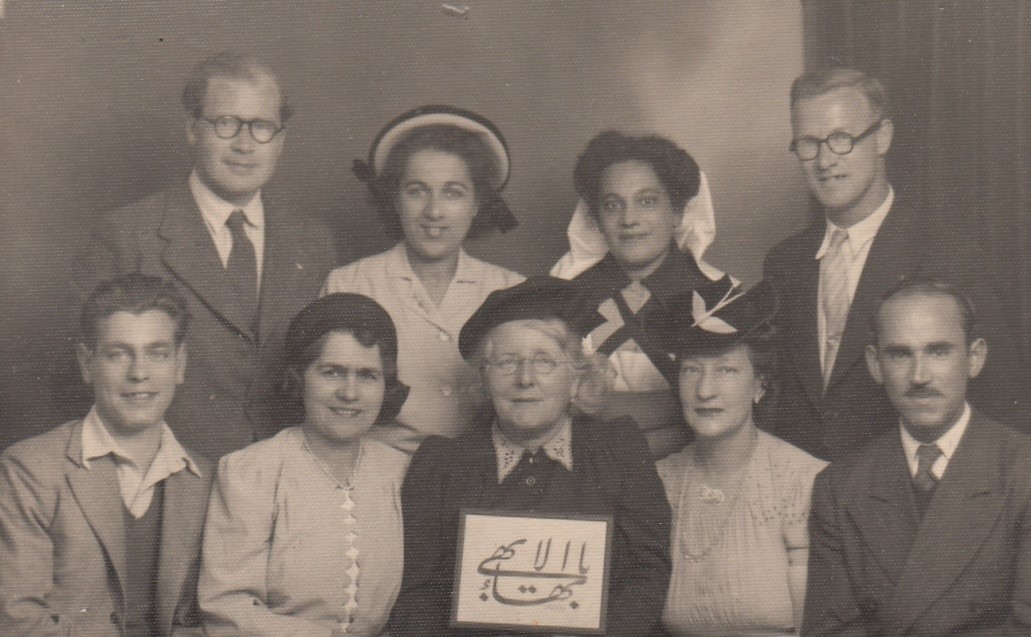
The first Local Spiritual Assembly of Cardiff, of which my mother was a member, was formed in 1948. I remember some of the Bahá’ís on that Assembly, Joan Giddings, Suzanne Solomon, Violet McKinley, her son Hugh, and my dear mother. Unfortunately I have forgotten the other friends, but I know Hassan Sabri used to visit and he always took an interest in our welfare.
When I was just 3 years old, my father became ill. He had been invalided out of the First World War and as his condition deteriorated he was admitted to hospital. I remember the ambulance paramedics carrying him out on a stretcher and my father smiling at us; that was the day Irene learned to whistle! My father was a kind and generous man and he used to buy us treats like bananas or a pineapple, rare fruits in those days of austerity. I can remember my mother being shocked at the prices he paid. She considered such purchases a terrible waste of money but he was just trying to please us. Maybe he knew that his life with us would be short.
Another memory I have of my father is when he gave me the one and only lecture when I had been naughty (this was a common occurrence, but this time I had disobeyed my mother). My father sat me down, and gently and lovingly explained to me that my mother was the best friend I would ever have and that I should always obey her. I didn’t really understand what he was teaching me at the time; all I could understand was that the kindness of his tone made me want to please him. For my birthday he used to hire a car and a driver and off we would go in what seemed, to a toddler, an impossibly large car with enormous running boards, to tour the countryside!

Alas, my father passed away in July 1948 and my mother was devastated. However, she couldn’t bring herself to try to explain death to her daughters and I was left to figure it out for myself. Irene was so young – only 18 months old at the time and I don’t think she has any memories of him, but she looks very like him! When I was four, I blurted out to poor Mum, “Daddy’s dead, isn’t he?” As usual my direct approach did not have the desired result – my mother just ran weeping from the room.
Alone in Cardiff my mother struggled to cope. My father had not left a will, so there was little income apart from ten shillings a week widow’s pension. Family members from London would come occasionally to visit and a Swiss Bahá’í called Ruth stayed for a while and tried to earn a living sewing clothes. After a while she left and Aunty Claire Gung stayed with us. She told me much later that she came to help my mother as she knew how she was struggling. Aunty Claire knew how to manage little children who didn’t eat their meals. She would choose a drink she knew I loved (Dandelion and Burdock) and ask me if I would like a glass of pop. Yes please! Well, eat your dinner and then you may drink this glass! Times with Aunty Clare were always full of fun. I remember one day my mother bewailing the fact that the last bottle of milk had soured and thickened. She was about to throw the milk away when Aunty Claire said she would drink it, downed the lot and licked her lips! A lesson for me in opposite opinions! Another time the McKinleys came to visit – Violet’s son Hugh brought my mother some green tea from Cyprus. Mum made a pot for all the family but when she tried to drink it, declared it disgusting and the packet went into the garbage! It took me a while to decide I quite liked green tea but I didn’t get the chance for about 40 years!

My mother taught me to pray and we memorised some Bahá’í prayers, but we also learned hymns and other songs. My father’s family were staunch Roman Catholics so my mother wanted me to have a broad religious experience. She sent me off to the Ecumenical Church morning Sunday school when I was just five, and in the afternoons I went to an evangelist group who taught children in the open air, at the park near our house. I really enjoyed all my religious classes in Cardiff and occasionally performed recitations at the local church. I don’t think at that age I made a distinction between any of the services I was attending but I was trying to understand about God, the soul and life after death. I can remember walking in Roath Park with my mother and asking her where my soul was: was it in my body, was it in my little finger? My mother’s response was to say she would tell me when I grew up. This was a common ploy and it bugged me that there was no-one to answer my questions. Of course a young child with only one parent also worries about what would happen if that remaining one were to die. One night I dreamt that my mother had died and I was beside her bed sobbing with grief and the fact that she hadn’t told me all the things she had promised to reveal later. Then the corpse spoke: “Have a sweet,” another typical response when she had no answer to my persistent questions. Around this time I was having bad dreams frequently but once I started praying for them to stop and they did, I realized the power of prayer and so never missed a night! It was never a problem to believe in God after that.
We used to walk into Cardiff to shop. One day we bumped into a handsome man in a beige raincoat, wearing a bow tie and my mother told me he was David Hofman who worked for the BBC. Another time we saw a lady dressed in a nun’s habit and I asked what she did. My mother replied that she served God so I exclaimed “Oh! I would like to be like her!” “No, never!” responded my mother, which left me as confused as ever!
Eventually Aunty Claire left to pioneer to Africa and she was sorely missed by me. Not long after that my mother decided to leave Cardiff and move back to Chiswick in West London to live with her mother, Jane Le Gray, and sister Emily, whom everyone called Aunt Sis. We travelled up to London by coach and when we arrived at the house my aunt said they weren’t ready for us. So for a few weeks we lived with another dear aunt called Mary. I was happy there but so missed Cardiff with the school just across the road, the park at the bottom of the road and the seaside a short train ride away. In 1951 I made a vow that I would leave London just as soon as I got the chance. I wanted to see hills and the sea from my window.
The Quiet Years in London 1951 – 1958
In London we rarely went to the Bahá’í Centre, whereas in Cardiff we were in constant contact with the friends who often called round. I remember there was a meeting place in Kensington and then the new premises in Knightsbridge were acquired but we hardly ever went there. I can’t recall why my mother stayed away from the Bahá’ís although she always read the correspondence from the Local and National Assembly with great interest. In the meantime, Irene and I were growing up and I started to question my mother about the Bahá’í Faith, with predictable results.
Val: What are the Bahá’í teachings?
Mum: Well they are common sense really
Val: How do you know that Bahá’u’lláh is the return of Jesus Christ?
Mum: In the Bible Jesus said, “I have many things to say unto you but ye cannot bear them now. Howbeit, when He the Spirit of Truth is come He will guide you to all things.”
And there ended the lesson! I was never any the wiser. My dear mother so loved ‘Abdu’l-Bahá and was sure that the Bahá’í teachings were God-sent that I told everyone I was a Bahá’í, just to be different, even though I was unable to explain just what I believed in. But help was on the way.
In 1957, the Guardian, Shoghi Effendi, was visiting London and caught a flu virus that was severe. Tragically he passed away and when the telegram came announcing first his illness and then his passing, my mother said we had to attend the funeral. We drove to Knightsbridge in our car and saw a huge cortege of large black cars waiting to depart for the cemetery in New Southgate. The funeral party set off and halfway through the cortege was our blue Standard 8 car. I can remember my distress because I thought we should be right at the back of the line but our Uncle John (McIlree) said if we were to do that we could lose sight of the convoy and miss our way! When we arrived finally at the Southgate cemetery and parked the car, we tried to enter the chapel and were told the funeral was for Bahá’ís only! That’s an indication of how long it had been since we had attended anything. Eventually someone recognized my mother and we were allowed inside. I watched in amazement to see so many people openly weeping with sorrow and grief. Only the wife of the Guardian, Hand of the Cause Rúhíyyih Khánum, maintained her composure. As an immature thirteen-year-old, who was also still suffering from the same strain of flu that had caused the passing of the Guardian, I found it hard to understand why everyone was in such despair, but of course I had no idea about the Covenant and the reasons why the future of the Faith was so uncertain at that time. Before the burial we were all allowed to pass by the coffin to pay our last respects. I saw one woman throw herself on top of the coffin and cry out her sorrows in a foreign language; only Rúhíyyih Khánum was able to finally calm her and assist her away from the graveside. I wondered what had happened to cause this display on her part. (I found out years later that her family had become Covenant Breakers and caused the Guardian many heartaches). My mother asked us if we would like to kiss the coffin and I said, “No way!” but she said we would be glad later in life if we did, so we obeyed. As I knelt, I prayed to the Guardian to help me understand who he was and so soon after that we were assisted.
Bahá’í Youth 1959 – 1969
A few months later, my mother received a letter from Dorothy Ferraby saying that now her husband, John, had been appointed a Hand of the Cause, she was about to leave Rutland Gate to live in Israel and would love to see Rose to say goodbye. So we went to the next Nineteen-Day Feast, ostensibly to meet Dorothy. Everyone was very friendly. I was fourteen by now and still curious. Irene and I were invited to attend youth classes, and to our surprise my mother agreed we could go – and on a Saturday night! This was the first time we had been allowed out on our own.
At the National Centre I found and read a few pamphlets on subjects such as Life after Death and Progressive Revelation and it all made sense to me, as my mother had said. Then I started on some books, in particular “Bahá’u’lláh and the New Era” by John Esselmont. I loved the teachings but I found the Holy Writings rather hard to understand so I stuck more to the Writings of ‘Abdu’l-Bahá. Finally my mother agreed to allow us to attend a summer school in Harlech, North Wales, when I was 15. She worried that we wouldn’t manage alone so we went down to Wales by car to visit Jean Pritchard who lived in Harlech. She invited us in to tea and showered us with such kindness that Uncle John, a friend of my mother, burst into tears and declared his faith on the spot! Jean also promised to look out for Irene and me at the summer school.
Summer school was such a new experience for us. There were lots of youth our age – many from Ireland, and England, and we slept in a big dormitory, attended the classes, and in the afternoons we were free to swim and play in the sand. It was wonderful to hear such great speakers as Adib Taherzadeh talk about various aspects of the Faith and by the end of the week I had decided that Bahá’u’lláh was indeed the Promised One and sought to connect with Him through prayer. That done, I didn’t actually write to the Spiritual Assembly of London to declare until I was 16, a few months later.
So, like many youth in those times, I was seeking and found all the answers in the teachings of the Bahá’í Faith. Irene and I attended as many gatherings as we could and gradually understood that this was a critical time in the progress of the Faith because we were without a Guardian and unless all the goals of the Ten Year Crusade were fulfilled, the Universal House of Justice could not be elected. Marion Hofman would come to the National Centre in Knightsbridge and express her fears that the Guardian’s wishes would not be met. I remember her talking about pacing the sidewalks (what are they, I thought) worrying that the friends would not respond to the call to pioneer. There was nothing Irene and I could do – we were still at school and unable to go pioneering, but maybe later! In the meantime we tried to teach our friends at school, which brought me into serious conflict with my headmistress.
The headmistress of Chiswick County Grammar School for Girls was also the scripture teacher, and she taught with true missionary zeal. At the time, I was reading about progressive revelation, and Miss Lee told my class that Muhammad was an Arab who had epileptic fits and during these fits thought He heard the voice of God and started a new religion which denied Jesus Christ. She encouraged us to move quickly to West Africa to stop the progress of Islam there. With all the innocence of one who had never encountered religious opposition, I raised my hand and told the class that according to my understanding, Muhammad had indeed been a prophet of God, who accepted the teachings of Jesus and that He had brought many more teachings which improved the lot of the people in His part of the world and rid them of some of their former barbaric practices, such as the burying of baby girls in the sand as they were thought useless in a desert environment. This explanation incurred the wrath of the teacher who firmly put me in my place and denounced me for my ignorance. The experience was very traumatic, and I can still remember exactly what she said. However, after the lesson several classmates came up to me and said they believed that what I had offered was true and not to worry about the attitude of the headmistress. Others in the class reckoned that I was Satan from that day on – even years later one of the girls reminded me that whatever I said were the words of the devil!
But I decided that, as it seemed that I was lacking in eloquence, I would train as a teacher so that I would be able to explain the Bahá’í Faith better when asked.
Once I had qualified at Brighton College of Education I was able to fulfil a local pioneering goal. I moved to Bedford for a year to join a small group of Bahá’ís, and then, when I was offered a place at Sussex University, I agreed to live in Hove to support the LSA there as one more person was needed to make up the numbers.
In 1969 Irene and I were able to go on pilgrimage, financed by my dear mother and Aunt Sis. When we were there, Irene was encouraged to pioneer by Hands of the Cause Paul Haney and Mr Furútan, and they lovingly counselled her as she was reluctant. I, on the other hand, had already decided to pioneer to Uganda, as Aunty Claire had been there for so long and I thought it would be wonderful to be with her. One evening of our pilgrimage, David and Marion Hofman invited us to dinner (David Hofman had been elected to the Universal House of Justice in 1963). We said some prayers and then David asked me what I was going to do when I had gained my degree. “Pioneer,” I said proudly. Very good, where to? Uganda! Why Uganda – because that is a British goal. David said, “Why not Zambia? That country really needs pioneers.” So I agreed, even though I didn’t really know where Zambia was and omitted to mention that I was planning to marry and move to Uganda with my husband. In Haifa I had a dream that I told my fiancé-to-be that we would now be moving to Zambia and he said that would be OK! But it was only a dream; when I came back to England and explained to him he didn’t agree, so I was obliged to pioneer alone.
Fortunately, the 1960s were termed the “Decade of Development” by the British Government and teachers to the former colonies were given incentives such as fares to and from the UK, housing, and a bonus gratuity if one completed the contract, so armed with nothing but a small loan from my mother I set off for Zambia in September 1969 to work in a primary school in Kafue.

_______________
Valerie Rhind (née Jones)
South Africa
December 2015
 UK Baha'i Histories
So pleased, Val, that you did actually get around to writing the story of your early years growing up as a Baha’i. In fact, your story is priceless.
Since you pioneered to Zambia in 1969, I know that you then were able to pioneer and serve the Faith in several other African countries. I sincerely hope that you will seriously consider writing Part 2 of your Baha’i history so that you canrecount some of the experiences you must have had on that amazing continent in the course of the past 55 years!
You and Irene are stars in every sense of the word!