
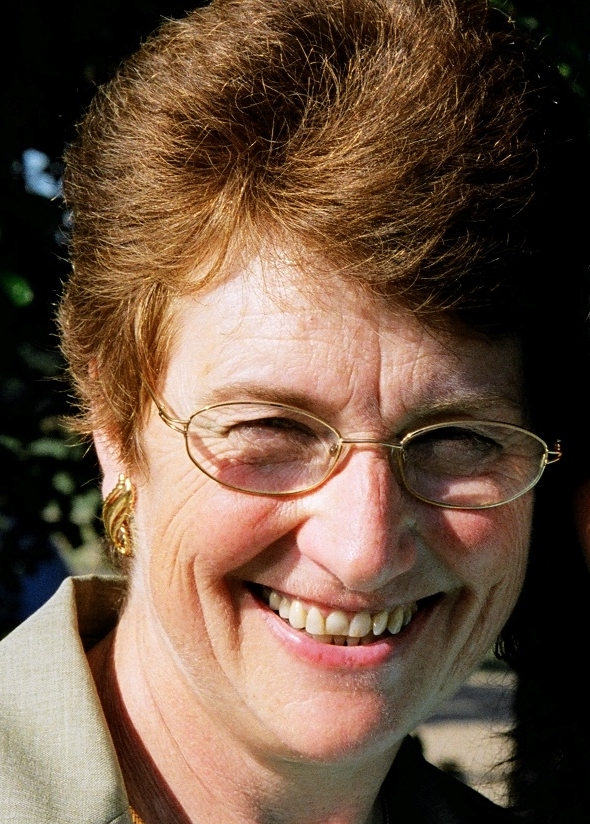
Margaret Appa
Childhood
My parents were John and Rose Wade. Both my parents came from challenging family backgrounds, where there was separation and unhappiness, but they never spoke about it and created, instead, for their little family a stable and loving home. I was the third of three children. My sister Christine was the eldest with my brother Colin five years younger, and myself five years younger than him.
My father was from a long line of people who were interested in ‘spiritual things’. There was a Reverend in the family and others who had explored new religious thinking who were not ‘conformist’ in the religious sense. My grandfather was a strict Victorian but one who encouraged conversations on all matters including religion. Hence, my father came from a background where questioning and discussion were quite normal.
My mother was, according to my father, an evangelical Christian in her younger days, who stood on street corners and warned all and sundry of their uncomfortable end if they did not accept Jesus. My mother never spoke about this time in her life to me or, as far as I am aware, my brother or sister.
My father was the manager of a small engineering company, and my mother was a homemaker until the time when she became a registrar of births, marriages, and deaths.
We lived in Barnet, north London, where my father was born. I was born in 1946, the third of three children, and we lived in a bungalow. When I was around six years old, we moved to a larger property; it was a whole new world for me with not only three floors, but the old bell panels still in place up in the attic rooms and downstairs to call the servants. However, the servants were long gone! I spent many happy hours playing pretend and imaginative games in the garden and creating and making both inside and out.
In around 1953, my parents heard of the Bahá’í faith. According to my sister’s memories of that time, the process began when she was around 16 years old. A brother (Catholic) and sister (Baptist) of our father visited our home and remonstrated with my father because he was reading books that were on the Catholic forbidden list. I think Carl Sagan was one of them. My father was fascinated not only by religious ideas but also scientific discoveries and discourse. As part of this conversation, the Catholic brother informed my father that as he was now aware of the Catholic teaching, if he did not convert, he would be condemned to hell. The sister retorted that, actually, she was in the right and he, the Catholic, would go to hell! My sister, Christine, listened to this conversation and was appalled that these things could be said. Consequently, at school she raised awkward questions within RE lessons and decided to find out for herself what was being taught in the churches.
My mother and sister attended the local Presbyterian church, and after the conversation between my father and his siblings, she requested the opportunity for the congregation to ask questions after the sermon. The minister agreed to a three-week trial of the idea. My mother raised the question: “Is there not a religion that accepted all faiths as true?”
An elder of the church, Robert Semple, responded that his son belonged to a faith that believed just that. The son of Robert Semple was Ian Semple, who was later elected to the first International House of Justice.
Ian Semple then visited my parents with a book to read… In Ian’s own words:
My recollection is that … my father had attended a meeting in the church hall after the service, and your mother had asked a question to which my father commented that his son was a Bahá’í and that they had an answer. As a result of that I was invited to visit your parents’ house, which I did, and I think I took with me a copy of the Kitáb-i-Íqán.
My father was in agreement with all he read and this led both my parents to investigate the Faith, spending approximately two years attending meetings at the National Bahá’í Centre, 27 Rutland Gate, London. I understand that it was John Ferraby, Hand of the Cause, who eventually challenged my father to make up his mind and “stop sitting on the fence!” My mother was with my father during this journey and they declared together in December 1955, although my father remembers that when he decided to be a Bahá’í, my mother stated that she had been waiting for him to make up his mind. My sister also became a Bahá’í at this time. I can remember visiting Ian Semple and his parents, who lived quite near; his mum was a Scot, and prepared the most delicious teas with fresh cooked drop scones and butter!
We became part of the London community, then just one Local Spiritual Assembly. We attended Feasts and other gatherings at 27 Rutland Gate, with Feasts often being attended by well over 70 people. The actual community was around 40-50, but there were lots of visitors. I can remember, as I got older, serving tea and refreshments … up and down the back stairs from the kitchen area, which then was on a floor between the first and second floors. I can remember gatherings for Hands of the Cause Mr Samandari, William Sears, and Rúhíyyih Khánum, amongst others. The one I have the clearest memories of is Mr Samandari, who was already an elderly gentleman. I sat on the floor in a crowded room listening to his stories … but I cannot remember who translated for him.
The London community itself was full of personalities who played a major role in developing it, but to me they were simply Bahá’í’s that I knew—Hasan Balyuzi, Hand of the Cause, John and Dorothy Ferraby, Meherangiz and Eruch Munsiff, Donald and Edie Miller, Kathleen Hyett, and a gentleman called Zein Zein. One person whom I particularly recall was Marjorie Parker, who, at a Feast, took me to one side and made suggestions as to how I could improve my reading of a prayer – by reading more slowly and holding my head high … the advice was never forgotten.
In November 1957, Shoghi Effendi passed away unexpectedly in London and was laid to rest in New Southgate Cemetery. It was, of course, a huge event, with many hundreds of Bahá’ís in attendance, but for some reason I was not allowed to attend; I was 11 years old.
We were the family who lived closest to the cemetery and my parents took on the responsibility themselves of making sure the burial site was kept tidy and clean. I went there after the funeral; it was very muddy with mountains of flowers either in bunches or in vases around the grave itself which was, at the beginning, covered with heavy planks of wood. My father recalls that he and my mother made a decision to create a pathway around the grave so that visitors could approach the graveside to say prayers without getting muddy feet. Eventually Rúhíyyih Khánum officially asked my parents to be the custodians of the site. I did not really understand the station of Shoghi Effendi at this time, but was happy to be a part of the family ‘team’.
In 1957 my sister Christine married an Iranian Bahá’í and moved to Iran. I lost a sister, and it was not until many years later when she came back to live in England that we got to know each other and became close.
In 1958/9 my father was elected to the National Spiritual Assembly of the Bahá’ís of the British Isles. He was totally dedicated as a Bahá’í, his life revolved around the Faith and it gave him a purpose that probably had been absent until then. However, it did mean that he was not so present at home, and this was not easy for my mother who had to develop her own interests. She focused on her painting and later became a registrar of births, marriages and deaths, which then meant she learnt to drive and acquired a little car of her own.
As a family we attended Summer Schools. I have memories of going with my mother to Mourne Grange Summer School in Northern Ireland (1961), but the only thing that I recall is the room I stayed in … it was a master’s room, full of the paraphernalia of a boarding school … black gowns, footballs, books … I didn’t like it one bit! I think it was then that we visited the home of the Villiers-Stuarts, a huge rambling mansion (or that is how I remember it), where the phone rang and no-one could find it to answer it!
In 1958, I went with my mother to the Intercontinental Conference in Frankfurt. It was the first very large Bahá’í event I had attended, and it was exciting not only because of all those people who were Bahá’ís, but also because it was the first time that I had Coca Cola to drink, and the first time I had experienced a feather duvet!
Harlech summer school in North Wales was perhaps our favourite; we went there often. The structure of the school was lectures in the morning. . There were miles of beach that were reached across the dunes. We had drama activities run by Val and John Morley; I was asked to be a ‘melting ice-cream’ … mmm! There were fancy dress events too; I was a “heavenly twin” together with Iain Macdonald (son of Charles and Yvonne Macdonald). I don’t remember if we won a prize or not! As a child growing up, I loved summer school because it was like an extended family with familiar faces and a time to catch up on what had happened during the year.
I was also a regular attendee at teaching conference and the annual convention, along with my parents, and often helping in some way, like on the book stall.
Although London was a large community, there were only a few youth growing up … I recall particularly Jyoti Munsiff, Brigitte Ferraby, Val and Irene Jones and Wendy Miller. I met many more youth at Ted and Alicia Cardell’s farm in St. Neots (Huntingdonshire) for ‘family days’. At the age of fifteen in 1961, I declared as a Bahá’í. It was not a big affair, although I still have the prayer book signed by the Local Spiritual Assembly of London I was gifted on that occasion; my father was on the LSA. I don’t remember any conversations around the Faith at home, and my father and mother did not push us in any way. We experienced it, we knew about it, and ‘there were books to read’!
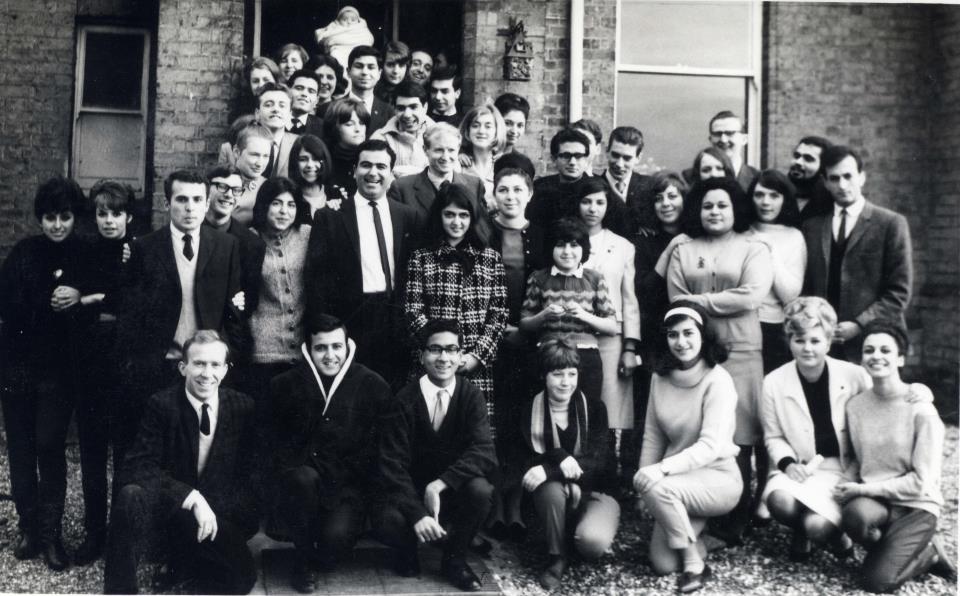
Youth gathering at Cardells’ farm, 1964. Margaret is on the far left in the third row back (with ponytail)
At home we had a constant stream of visitors from all over the world, e.g. Malaysia, Mauritius and many other places. Adib Taherzadeh was a regular visitor. My father notes that when the Hands of the Cause came to visit the Guardian’s Resting Place, he and my mother felt it was their responsibility to meet them and bring them home for refreshments.
My father was appointed to the National Teaching Committee and made secretary. The meetings took up a lot of time, and he was given permission to hold them at home. Jackie Mehrabi became my father’s secretary and lived with us for a period of time to help my father plan and complete tasks.
One day, after school, I popped in to see her and she showed me how to make a set of cards to play snap. I was a great maker of things so this must have kept me busy for hours! This was the period of the Ten-Year Crusade, and my father mentions that it was an ‘exciting time’.
My father was a natural organiser, and around 1960/61 he was asked to serve on the committee organising the World Congress. I was drawn into this planning; I had just taught myself to write in italics and so my father gave me the job of writing names by hand on hundreds of ticket books that would allow for entry into each session of the Congress. I still have my own book of tickets.
Bahá’í World Congress, London
In 1963 the World Congress took place in the Royal Albert Hall, London. Around 7,000 Bahá’ís were present from all over the world. It was an extraordinary event, and I was totally overwhelmed by the Royal Albert Hall being filled with Bahá’ís – could there really be so many Bahá’ís in the world?! Many wore their traditional costumes and, of course, the atmosphere was electric. Such a contrast with the world outside. London had never witnessed such a collection of people from over the world on its doorstep.
I can recall only highlights of the Congress sessions, but the presence of the first Universal House of Justice was very significant. Uncle Fred, an aboriginal Bahá’í from Australia who addressed the Congress, was an image never to be forgotten. My father was on duty throughout, and I have a photograph of him with others holding back the crowd while Ruhiyyih Khanum moved either in or out of the hall.
Visitors to the Congress were taken by bus to the resting place of Shoghi Effendi. They passed through a stone gateway* and just inside the gateway was a small hut. I sat in this hut filling small brown envelopes with dried flower petals that my mother had collected over time from the resting place of Shoghi Effendi and had dried in our aga cooker in the kitchen. We must have prepared many hundreds beforehand but there were not enough and we needed more, so that every visitor could take one away with them.
*The stone gateway was eventually moved to the entrance of the road leading off the Chapel area towards the resting place of Shoghi Effendi.
Growing Up
In December 1963, at the age of 17 and in my first year of art college, I married Ranjit Appa. He had arrived in the UK from Mauritius nine months earlier and had been introduced to my family on his arrival. He was 21years old. We lived in in the attic rooms of our family home. I continued with my studies while Ranjit worked, and when I graduated he went to university to complete his studies, while I went out to work.
In 1966, London was split into borough communities. Ranjit was elected to the first Local Spiritual Assembly of Barnet, along with my parents, Wendy Ayoub, Roxy and Marie Edwards, and Bob and Margaret Watkins.
My father was invited to serve at the Bahá’í World Centre in 1966 as the Secretary-General of the Department of Israeli Affairs. He was destined to deal with many issues involving consultation and negotiation with Israeli government departments, regarding all sorts of matters, on behalf of the Universal House of Justice.
I was able to visit them from time to time and experience, in a small way, their life at the World Centre. When they arrived, there were only seven members of staff. My mother wrote to us one December when the weather had been very wet and there was flooding in the basement of Number 10 Haparsim, where items had been stored. My parents and members of the Universal House of Justice had spent the day bailing water out of the basement and removing the contents to safety. They served at the World Centre until 1980 and only returned because my mother became ill and could not be cared for in Haifa.
After my parents left for Haifa, Ranjit and I took on responsibility for the resting place of Shoghi Effendi, which was by this time complete with a white marble monument and the golden eagle. The greatest challenge was minimising the damage done by those friends who sprinkled attar of roses over the marble … it was almost impossible to remove.
Ranjit and I served together on the National Pioneer Committee, going for meetings to 27 Rutland Gate, and meeting up afterwards with Charles and Yvonne Macdonald in their home upstairs to play chess and chat till late. I spent many hours composing letters to prospective or ‘in place’ pioneers, even though I was young and inexperienced.
I graduated in 1968 with a degree in graphic design and a teaching certificate, and so began a lifelong passion for the arts and education. I taught in a secondary school until our first child, Jamil, was born in 1972.
Mauritius
When Jamil was born, Ranjit’s parents asked us to visit them in Mauritius. My parents were serving in Haifa, so there was nothing to keep us in the UK. Ranjit applied for a lecturer’s post at the university and was accepted. In September 1973 with Jamil just one year old, we left to live there.
Ranjit worked in the university for a couple of years, but was then invited to take up a position with Air Mauritius, where he remained for the next 30 years. I worked in the Mauritius Institute of Education, set up by the World Bank and dedicated to training teachers. In the Art and Design department, I was responsible for all aspects of art education on the island. I loved the challenge, and really enjoyed the experience of watching teachers develop their capacities to teach art and design.
The Bahá’í community was very active and we were both involved in local community life and all national events. I taught children’s classes and was able to offer creative approaches which they had never before experienced. It was a good time for me and, by then, our two children—our daughter Janita was born in 1977.
Return to UK
By the late eighties, we had to take important decisions about the future education of the children. Living on a small island in the middle of the Indian Ocean was idyllic but it did not offer opportunities for the children to develop their potential.
We made the decision that I would return to the UK with the children while Ranjit made decisions about leaving his job with the airline, which he loved; the airline did not want to lose him either. He did not return to the UK to live until fourteen years later.
However, he had learned how to fly, so he was able to work the flights to the UK to visit us, and we would spend holidays in Mauritius when possible.
Thus, I was on my own and made the decision to start a research degree in Art and Education. At this time I also became involved, with our children, in activities for the junior youth and youth that were started in Sussex at the home of Cecilia Smith and her two daughters. All the activities were focused on using the arts, and from these early events ‘Youthquake’ was born, a project in which groups of young people from all over the UK came together in small groups to perform dances in public places that expressed their Bahá’í beliefs.
From these early beginnings, ‘Youthquake’ was invited to perform at the second Bahá’í World Congress in New York in 1992. We travelled there with twelve of the group, including Janita who was part of the group who performed for the youth congress. It was a completely overwhelming event, with 30,000 Bahá’ís present, so many that the sessions were repeated morning and afternoon to enable everyone to attend. This Congress was a turning point for the arts; all forms of art were employed as a serious means of communication with the audience; music, drama, pageantry, and the visual arts. This was in contrast to how the arts had been used previously when they were considered more ‘light entertainment’. It was so exciting to experience this, and very influential.
Arts Academy Beginnings
Inspired by our mutual experiences, on our return home, Cecilia and I talked about developing an event that focused on the arts and offered opportunities, particularly for young people, to come together to develop their confidence and skills through study of the arts in a spiritual environment. We had by then organised and managed at least two summer schools in the south of England, so we had the confidence that we could plan and manage an event of this sort.
Alongside this project, I began professionally developing an aspect of my life that was to influence the plans Cecilia and myself were hatching. I came across a method of teaching drawing, that when linked to spiritual / educational concepts in the Bahá’í writings, was to become immensely successful in helping people find their confidence and believe in their ability to draw what they could see.
The confluence of these two areas of my life had a great influence on my contribution to the development of the Bahá’í Academy for the Arts from 1993 onwards. It began with just 25 people at the first event and grew over the years to welcome nearly 300 people of all ages and abilities from all over the world.
This event brought together my three passions – the Bahá’í Faith, the arts and education – so I was in my element. Ranjit also played a major role as its financial manager. I loved the planning, organising, and delivering of the event. I enjoyed the opportunity to explore and experiment with concepts drawn from the writings of the Faith and the varied experience of the team. We learned each year from our reflections and evolved the event from humble beginnings to quite scary success. It was a real joy to see people arrive at the beginning of the week, often anxious and unsure of themselves, and then complete the week by presenting what they had achieved to the whole Academy. It was simply putting into practice spiritual concepts, in this case in an educational context, using the arts as the medium of learning.
This was an amazing journey involving many talented, dedicated, and enthusiastic people along the way, and with the loving support from the National Spiritual Assembly of the United Kingdom, that consistently supported what continued to be an individual initiative.
Concepts behind the Academy model
Over time we began to recognize that there were certain concepts underpinning the Academy. We started out with the goal of offering the participants the opportunity to develop their creative skills in an environment inspired by the Bahá’í teachings. But as time passed, we became aware that an educational model was evolving, recognizing what enabled participants to fulfil their potential.
- Love was the foundation of the event … love of creativity, love of learning and the educational process, and a deep love for the teachings of the Bahá’í Faith.
- There was a sincere belief that every single human being has gems hidden within them; they need encouragement in the right environment for these gems to emerge and shine.
- The environment needed to be encouraging, nurturing, empowering – but also challenging to enable participants to reach their full potential.
- Personal excellence as a goal was also key; no competition, just aiming to do the best possible in the time available.
- An environment of respect where there was no criticism, no judgement, and no comparison created a safe learning space for all.
- Discipline, both in behaviour and attitude of all involved in the event was also hugely important.
These concepts became recognized as the hallmark of the Academy and enabled many participants to emerge with new knowledge and skills, confidence, and a renewed belief in their creative capacity and spiritual strength.
In 2010, the Bahá’í Academy for the Arts closed after 17 years of development. Who knows what will grow from the seeds sown over all these years. I am now involved in developing cluster schools and am still developing the drawing course – now taught from my own studio at home. I am still in awe of the role I could play by applying spiritual concepts in practice, and will continue if given the opportunity, to apply the learning acquired from life so far to whatever comes my way in the future.
During the development of the Arts Academy, I also had the honour of being selected as one of the 19 British Bahá’ís to attend the Opening of the Terraces in Haifa in 2001. It was, of course, a stunning event with all the visitors from around the world sitting on a stage that had been erected over the roundabout at the base of the terraces, so that the backdrop to the inspirational performances was the view upwards towards the Shrine of the Báb and beyond.
Ranjit retires and comes home
In 2000, when Ranjit finally retired and returned to the UK, we bought a property that enabled us to provide space for Baha’i events, and at the same time allowed me to teach from my own studio at home. Over the years we have held many community events, unit conventions, weddings, and open house events that often welcomed 40-50 people. It was an amazing experience to be asked, amongst others, to trial the concept of cluster schools when the thinking was moving toward smaller summer schools based around clusters; these were also held in our home.
In 2004, Ranjit’s mum, who was living in Mauritius, became unable to care for herself, and we made the decision to bring her to the UK to live with us. It was a major move for her, from a tropical island to a northern European climate. It also impacted on our lives as she was very anxious and unable to be left alone. So, just at the time when we had planned to travel and visit family and friends around the world, we needed to remain at home, only travelling as individuals. Aji, as we called her, passed away in 2014.
We now have four grandchildren, two in Bristol and two in London, and life moves on far too quickly. The Bahá’í community has evolved and grown, and who knows what will result from an ever-closer engagement with the Plans of the Universal House of Justice as this Faith of ours moves into its future.
2014 – 2023
In 2016 we decided that our home in Sussex was not going to be suitable as we moved into our later years, so we had to make the decision about where to go. Our son and his children live in Bristol, and our daughter and her family live in London. We made the decision to move to London, where we could be close to one family and within easier reach of the other.
We found a house in Southwest London, but our property in Sussex took a while to sell, mainly because of Brexit. I began travelling into London each week to assist Janita with her classes for the children in the neighbourhood, so I used our new home to stay over for a couple of nights each week.
2016 was also the year that Ranjit was diagnosed with cancer and began treatment. This was the beginning of a long journey for us both. First in Sussex and then in London when we finally moved house in 2018.
Between 2019 and 2022, when we also had Covid to deal with, was not easy but we had some very memorable family holidays during this time. One on a narrow boat, one in Mauritius, and another in Scotland. It was a happy time for Ranjit, and I treasure those memories.
Research and book
During the Covid pandemic, ideas that I had been researching and writing about and had fascinated me since the time of the Bahá’í Academy for the Arts came together, and I had the opportunity through the lockdown period to present them to various groups around the UK in online meetings. From this experience I gained the confidence to think I might have enough material to create a book.
The subject of the book is the relationship between art and science. There were many questions in my mind, for example why in the Bahá’í Writings we are told that art incorporates the skills we use to apply our knowledge in whatever occupation, profession, personal interest we may have, while society has the view that art is confined to only the visual, performing, and written arts. Science also, has a very different meaning in the languages of Bahá’u’lláh and ‘Abdu’l-Bahá to that we understand now, particularly in the West.
Research into the history of culture, language, and education revealed reasons that have simply become accepted as the truth. My approach was to question these accepted ideas and open up a conversation in which to explore seeing science and art very differently, as they are portrayed in the Writings; that is, totally integrated and an essential part of the life of every individual on the planet. The title of the book is The Science and Art of Being Human and will be available in 2024.
Writing allowed me to cope with Ranjit’s worsening condition and to accept that the end for him was close. He passed away at home with family around him in May 2022.
Academy reunion
In 2023, as a way of celebrating 30 years since the commencement of the Bahá’í Academy for the Arts, a gathering was organised at the Bahá’í Training Centre over a weekend to bring together those who had played a part as tutors, presenters, and organisers. It was a weekend of intense activity, both celebrating the achievements and outcomes, as well as exploring, in the light of learning, the role of creative capacity within the new Nine Year Plan.
In my own community we have a nucleus of friends and several neighbourhood activities that are blossoming and beginning to produce fruits, particularly the persevering effort that has gone into the classes for children, who are now moving into Junior Youth Groups. The work being done to integrate the parents into their own learning journey while their children are in their class is also bearing fruits of understanding and commitment.
The growing number of neighbourhood activities that are now happening in communities is exciting as the vision slowly becomes a reality. I organise two neighbourhood groups. One is for a small group of elderly friends on my street who come together once a month to have conversations and do creative activities together. The other is a group from the local area called Cake and Conversations, that comes together monthly to have a conversation around a question raised by a member of the group. The purpose is to create a safe, respectful space where deeper questions can be shared, and insights and knowledge can be applied to the questions. It is a fascinating journey and has demonstrated how conversations are so powerful in shifting thinking from often unquestioned attitudes to a new perspective, greater hope, and tools and strategies to apply to life’s challenges.
What of the future? Who knows, but it is sure to be exciting, challenging, and full of surprises.
2023 -2025: Update
My book was published in 2024 and is creating what I aimed for … conversations and exploration of the relationship between art and science, how a more coherent understanding sheds a different light on how we see ourselves as human beings, and what potential we have to use our knowledge and skills, science and art for the betterment of the world.
Life is just as busy …. I am still assisting with children’s classes but am now working with the parents to encourage conversations and understanding around what their children are learning.
My Cake and Conversations group is flourishing, and we are exploring some fascinating questions that lead to profound thinking and reflection. Others have also picked up this model as a portal into a deeper engagement, and one of my participants is on a journey through the Training Institute courses.
I am back on a team organising the Southern English Summer School, which is a fascinating opportunity to champion the arts. The line up this year includes three skills courses alongside and on the same level as the knowledge-based courses that are always offered.
I am researching and writing our spiritual family tree, a fascinating project, that illustrates how close we are to the birth of this mighty Revelation. I managed to go back to the time of Bahá’u’lláh in eleven steps, each step an essential part of our family story. If each of the individuals in our history had not made the decisions they made, would I or my family have been blessed with becoming Bahá’í?
Who knows what the next few years might bring! I just hope to have the energy to continue contributing to the present Plans to the best of my ability … there is far too much still to achieve!
____________________________
Margaret Appa
February 2025
 UK Baha'i Histories
How exciting to have access to your life, dear Margaret. Our lives have crossed through our children, but never as close as I would have liked. It is wonderful to get to know you… even if it is through the experience of reading this marvellous account of your service to our beloved Cause. Happiness coming to you from Warsaw
Dear Margaret, You may not remember me but I certainly remember your parents.
I shall never forget how they enthused me with the possibility of pioneering to Fiji, instead of Bobby Leadham, who stood down for me but family problems prevented me from going, so Bobby went after all. She met a milionaire and got married. Just shows what pioneering can do for you.
My first Pilgrimage found myself and the onetime Vivian Isenthal, now my wife, being greeted by Rose and excitedly tapping John on the shoulder. He got annoyed at being disturbed as he was busy with someone impoortant, but when he saw us he nearly dropped in his tracks. He did not know we were married and of course Vivian was not there in her maiden name which was Isenthal. We both adored your parents.
Love all round
Ron
Lovely to read this Margaret! So many areas of Bahá’í service – I didn’t know you were a child bride though 🙂 Congratulations on 50 years xx
What a beautiful, engaging and inspiring story.
Wonderful to read your story, Margaret! Our lives did touch every now and then in several ways, but the most recent was at Summer School where I attempted to learn to draw at one of your sessions! My hands are better equipped for the piano than for drawing though! Congratulations on your and Ranjit’s 50th Wedding Anniversary! “Sue” and I only made to our 47th before he passed away exactly 18 years ago today. Warmest love to you and family, Sylvia
Margaret
I enjoyed reading your lovely story.
Myself and our two daughters, Tessa and Alexandra, only made it to one Academy (it was during our 17 years in the Outer Hebrides and it was very expensive to travel down and book for the Academy so we couldn’t do it twice!). I loved the atmosphere and Alex (aged 5 or 6) fell in love with “The Lion King”, thus starting her on a professional road devoted to dance and musical theatre so thanks all of you for that. Unfortunately when we were in a position to come to the Academy again it had closed its doors but thank you so much for that incredible service.
Your father and mother were favourites of mine. The last time I saw John was when he visited us in Stornoway with Carolyn.
When will you come to Inverness again? You’re welcome to visit anytime. We still remember the “Storytelling and Puppet-Making” course!
Love Liz
I have such happy memories of seeing John and Rose when I went on my first pilgrimage in 1971. They entertained me and my Sardinian sister pilgrim so lovingly. I already knew them from before pioneering to Sardinia but it meant so much to Maria Loi who was a very new believer and the first Sardinian to go on pilgrimage.
Dear Margaret,
What a wonderful life story, thank you. I had just recently read the story of Mr Ian Semple and it was wonderful that his parents, who did not become Baha’is, were extremely supportive of him and of course taught the Faith indirectly…. and how wonderful that Mr Semple’s father in the church was able to answer your sister’s question….etc.
Wow to have been at both World Congresses…..what a bounty and I loved the the story of the petals……really a joy to read all of your story.
And of course thank you so much for the Arts Academy….brought so many people closer to Baha’u’llah. I would one day love to attend one of your drawing courses.
Much love
Simin
Dearest Margaret,
It was wonderful reading your story. It was all so familiar to me, the people, the Baha’i schools, (particularly Harlech and its sand dunes), the kitchen in the Baha’i Centre between floors, the Villierstuarts home in Northern Ireland, the World Congress in the Albert Hall, the Morleys and their theatrical presentations, even many of your personal anecdotes I clearly remember! In answer to your query about the fancy dress when you went as twins with Iain, I remember you won first prize. Second prize went to Shahram and Farhad Firoozmand who dressed up as an ostrich! Shahram shaved his legs and put on nylons to make us all think he was a woman!
One image I have of you always is a beautiful young English rose dressed in an Indian sari! I knew you married very young but I didn’t realise you were only 17!
Thank you so much for all these great memories….
Much love to you
Vida Stendardo (née Taherzadeh)
So we did win the Fancy Dress Competition dressed as the ‘heavenly twins’! I remember us doing it, but not that we won – I can sleep easy now!
I really enjoyed reading your evocative account of distant days. I too remember the privations of Mourne Grange Summer School – your Mum wept when she saw the room she had been given – the one you describe.
Your Dad was a ‘tornado’ of a man.
He had such energy, although a car drive with him was definitely a ‘white-knuckle’ ride!
Our respective parents were part of an extraordinary group of adult Bahá’is who had had such an all-consuming dedication to the Faith and who were such luminous examples to us in our childhood and youth. Your service to the arts, with dear Cecilia, is legendary, and you and Ranjit have been such loving and inspiring members of the British Bahá’i Community.
Your dear Mum Rose came to meet me on the platform of a London station. I was eleven years old, on my own, having travelled up from my uncle’s in Worthing. She and I had never met, but I was so relieved to see her as I was told it was your sister Christine who was going to meet me, and she had been held up.
So thanks for sharing your story and warming such happy memories!
Dear Margaret, have just spent a lovely afternoon by the beach with friends of the faith and sitting down at home with my cuppa and mark’s iPad I start to read your wonderful story! So interesting, inspiring. It maintains a sort of balanced level of spirituality, knowledge and progress, the characteristics you possess! With loving greetings Jess Habibi
Dear Margaret, reading your life history brought back some good memories of the time spent with you during children’s classes and in our local community. Wow, your life is so rich in memorable events. I am glad I was part of it. Next time I come to England I would love to come visiting you if possible. Happy 50th Anniversary to you and Ranjit. Thank you for everything you brought me in my learning journey. Much Love, Vanessa Curpen (Mauritius)
I just read this to Ron in our home in Montreal.
Remembering all our Baha’i family in the 60s UK.
Ron and I have so many wonderful memories of your Mom and Dad as well as you and Ranjit both at the Baha’i Center as well as at Guardian’s Shrine and also summer schools.
Dear Margaret, It was a pleasure to read your autobiography. You told your story with simplicity and candor laced with powerful Baha’i events. How many times I longed to attend the Arts Academy. Ron and Thelma Batchelor always spoke so glowingly about their posiive experiences there. Maybe someday when my husband and I visit England we can enjoy a drawing lesson from you! Happy 50th Anniversary to you and Ranjit!
Pingback: Bob Watkins (1926 – 2007) | UK Baha'i Histories
Just read your story Margaret. Love it.
Such amazing memories!
( Feeling inspired to finish writing mine! )
Warmest love always, Cecilia.
Pingback: Liz Albrow | UK Baha'i Histories
Dear Margaret, I just found your story and now I am going to send the link to our three daughters Mary, Ellie, and Nan. They will be thrilled. You and Ranjit made our stay in your flat such a memorable time in our lives. Every day there was a treat for five somewhat lonely Americans. I remember especially that Ranjit was worried about our next move to the wild west in El Paso, Texas. We have been here over 48 years now. Much love. Ellen Nelson
April 25, 2015
Pingback: Diane Profaska | UK Baha'i Histories
Pingback: Don and Margaret Love | UK Baha'i Histories
Pingback: Don and Margaret Love | UK Baha'i Histories - Bahai Journal